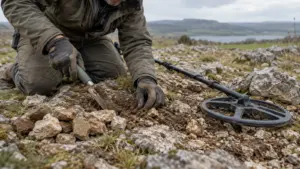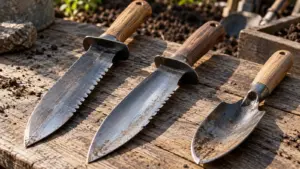
10 Best Metal Detecting Shovels for 2026
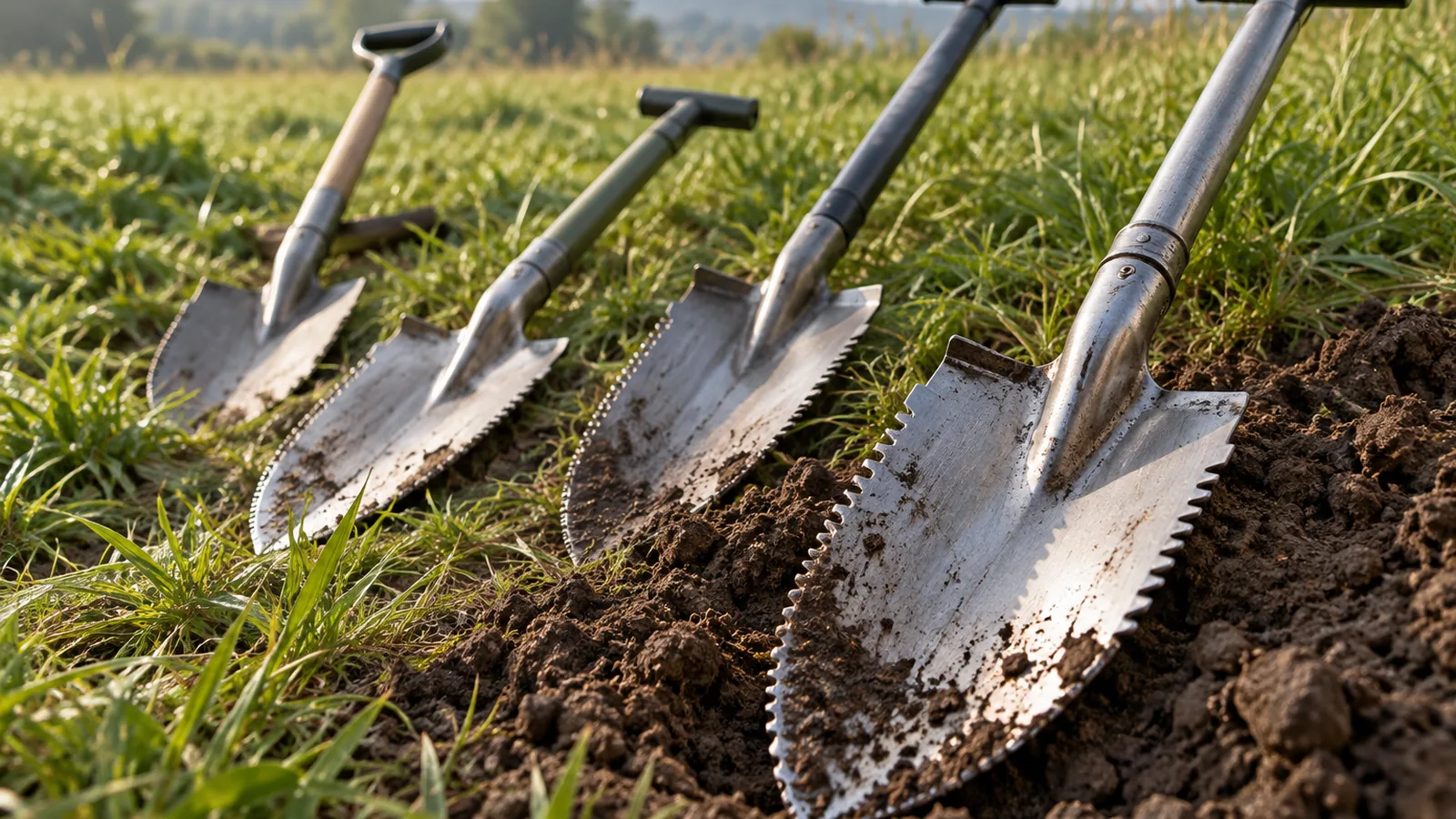
Kellyco Metal Detecting Shovel is the Best Overall for hunters who want a full-length tool with a serrated blade and footstep. For root cutting, choose the DR.ÖTEK T-Handle Spade Shovel; for tough soil, the REDCAMP 46-Inch Metal Detecting Shovel; and for a T-handle grip, the GADFISH 40-Inch Detecting Shovel.
For longer hunts, consider the DragonXT 36-Inch Detecting Shovel. The CKG Adjustable Detecting Shovel offers adjustable reach, while the UIABOPZ 39-Inch Root Slayer Shovel and DIOVPLX 39-Inch Treasure Shovel are built for serrated cutting. For compact digging, compare the CKG Double-Serrated Digger and LRLXE Double-Serrated Digger.
Match length and blade edge to your ground and digging style. Compact diggers suit careful, smaller excavations; longer shovels offer more reach and use for deeper targets and tougher ground.
The comparison table covers tool type, overall length, and blade edge.
Our top picks for metal detecting shovels
- Best Overall: Kellyco Metal Detecting Shovel suits you if you want a 36-inch carbon-steel shovel with a double-serrated blade.
- Best for Root Cutting: DR.ÖTEK T-Handle Spade Shovel suits you for cutting roots with its serrated blade and adjustable, detachable handle.
- Best for Tough Soil: REDCAMP 46-Inch Metal Detecting Shovel has a manganese-steel head, carbon-steel handle, and serrated edges.
| Kellyco Metal Detecting Shovel |  | Best Overall | Tool type: Metal detecting shovel | Overall length: 36 in | Blade edge: Double-serrated | VIEW LATEST PRICE | Read Our Analysis |
| DR.ÖTEK T-Handle Spade Shovel |  | Best for Root Cutting | Tool type: Metal detecting spade shovel | Overall length: 31.6-45.6 in | Blade edge: V cutting blade, serrated edge | VIEW LATEST PRICE | Read Our Analysis |
| REDCAMP 46-Inch Metal Detecting Shovel |  | Best for Tough Soil | Tool type: Metal detecting shovel | Overall length: 46 in | Blade edge: Double serrated | VIEW LATEST PRICE | Read Our Analysis |
| DragonXT 36-Inch Detecting Shovel |  | Best for Long Hunts | Tool type: Metal detecting shovel | Overall length: 36 in | Blade edge: Sharpened blade | VIEW LATEST PRICE | Read Our Analysis |
| CKG Adjustable Detecting Shovel |  | Best Adjustable Reach | Tool type: Adjustable metal detecting shovel | Overall length: 32-38.6 in | Blade edge: Double-serrated root cutter | VIEW LATEST PRICE | Read Our Analysis |
| UIABOPZ 39-Inch Root Slayer Shovel |  | Best for Compacted Ground | Tool type: Metal detecting shovel | Overall length: 39 in | Blade edge: V-shaped tip, serrated edge | VIEW LATEST PRICE | Read Our Analysis |
| DIOVPLX 39-Inch Treasure Shovel | 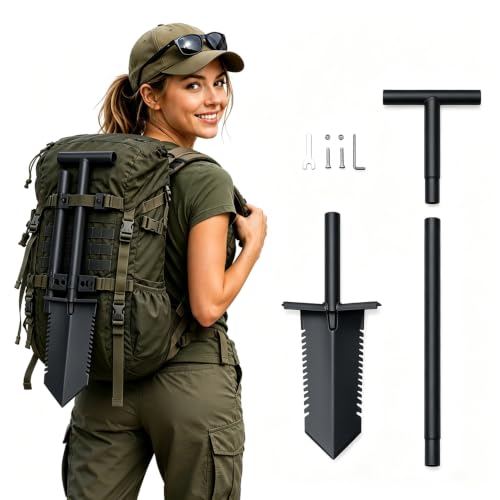 | Best Serrated Blade | Tool type: Treasure hunting shovel | Overall length: 39 in | Blade edge: Double-sided serrated | VIEW LATEST PRICE | Read Our Analysis |
| CKG Double-Serrated Digger | 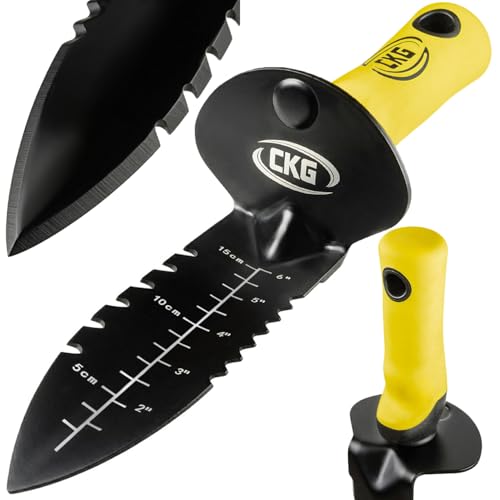 | Best for Compact Digging | Tool type: Metal detector shovel | Overall length: 10.24 in | Blade edge: Double serrated edge | VIEW LATEST PRICE | Read Our Analysis |
| LRLXE Double-Serrated Digger |  | Best for Belt Carry | Tool type: Metal detector shovel | Overall length: 12.8 in | Blade edge: Double serrated edge | VIEW LATEST PRICE | Read Our Analysis |
| GADFISH 40-Inch Detecting Shovel |  | Best for T-Handle Grip | Tool type: Metal detecting shovel | Overall length: 40 in | Blade edge: Squared teeth | VIEW LATEST PRICE | Read Our Analysis |
More Details on Our Top Picks
Kellyco Metal Detecting Shovel
For roots and compact ground, Kellyco’s all-terrain build makes it a strong overall choice. Its 36-inch carbon-steel shovel has a double-serrated edge to cut through roots and tough soil. The built-in footstep adds use as you press the blade in, while the ergonomic T-handle supports your grip. At 36 inches long, it gives you a full-size shovel for digging deeper targets than a hand digger.
At 5.8 pounds, it has substantial carry weight for a shovel you take across a hunt area. The weight may feel burdensome if you prefer a light tool for long walks between targets. Its 6.3-inch width gives it a substantial profile when packed.
Skip it if: you want to carry less than 5.8 pounds on long walks between targets.
- Tool type:Metal detecting shovel
- Overall length:36 in
- Blade size:6.3-inch width
- Blade edge:Double-serrated
- Blade and shaft:Carbon steel blade
- Weight:5.8 lb
- Grip and step:Ergonomic T-handle; built-in footstep
- Sheath included:—
DR.ÖTEK T-Handle Spade Shovel
Root-heavy sites suit its serrated V-cutting blade, which helps careful diggers slice roots while opening a plug. The DR.ÖTEK T-Handle Spade Shovel has a detachable handle that adjusts between 31.6 and 45.6 inches. Use the longer setup to pry up soil and sod without bending as far, or shorten it for closer, more controlled digging around a target. Its powder-coated carbon steel blade and steel pipe handle form an all-metal build.
Lock nuts secure the detachable shaft, and the anti-slip foot peg gives you a place to press down as you dig. Grip tape covers the handle, while the shorter configuration is lighter to carry. At 4.5 pounds with the full handle, it’s a substantial tool to carry; the handle detaches to reduce its packed length.
Skip it if: you want less weight to carry than a shovel at its full 45.6-inch length.
- Tool type:Metal detecting spade shovel
- Overall length:31.6-45.6 in
- Blade size:—
- Blade edge:V cutting blade, serrated edge
- Blade and shaft:Powder-coated carbon steel blade, steel pipe handle
- Weight:4.5 lbs
- Grip and step:Anti-slip foot peg, non-slip grip tape
- Sheath included:—
REDCAMP 46-Inch Metal Detecting Shovel
For detectorists digging rocky, wet, sandy, or hard-packed soil, the REDCAMP 46-Inch Metal Detecting Shovel brings a long handle and root-cutting edges. Its 46-inch length provides reach, while the narrow, curved blade is made to slice compact soil and cut through roots. The head is manganese steel, the handle is carbon steel, and the double-serrated edge loosens hard-packed earth. A widened steel footrest gives your boot a stable place to press, and the T-grip has an anti-slip design for use with wet or gloved hands.
It separates into 3 twist-together sections for tool-free assembly and storage in a backpack or car trunk. That breakdown helps with transport, but you’ll need to join the sections before digging. Once assembled, its long reach and footrest suit deeper targets and firm ground better than small, careful excavations. The 46-inch shaft is the main limitation in tight spaces, where a shorter hand digger is easier to position.
Skip it if: your digging requires a short tool for precise work in confined areas.
- Tool type:Metal detecting shovel
- Overall length:46 in
- Blade size:—
- Blade edge:Double serrated
- Blade and shaft:Manganese steel head, carbon steel handle
- Weight:—
- Grip and step:Widened steel footrest, T-grip
- Sheath included:—
DragonXT 36-Inch Detecting Shovel
Compared with the Kellyco Metal Detecting Shovel, this 36-inch option suits hunters who want reach and less fatigue on long hunts. Its 3.4-pound weight and length balance use with control during prolonged digging. The sharpened 4 x 3-inch blade is designed to penetrate different soil types, while the T-handle gives you a secure grip for careful recovery. It’s aimed at relic, coin, jewelry, and gold prospecting work.
Its ergonomic T-handle supports a secure grip, and the sharpened blade helps with digging in varied soil. That length can be cumbersome in tight spaces, where a compact hand digger is easier to position. The 4-inch-wide blade keeps the digging profile narrow for target recovery.
Skip it if: your work requires a digger that fits into confined areas.
- Tool type:Metal detecting shovel
- Overall length:36 in
- Blade size:4 x 3 in
- Blade edge:Sharpened blade
- Blade and shaft:4 x 3-inch blade; 36-inch length
- Weight:3.4 lbs
- Grip and step:Ergonomic T-handle
- Sheath included:—
CKG Adjustable Detecting Shovel
Choose the CKG Adjustable Detecting Shovel if you want adjustable reach for different digging positions and heights. Its two-piece shaft offers four settings from 31.9 to 38.6 inches, so you can pick a longer stance or pack it down for transport. The 304 stainless-steel blade measures 9.8 by 6.6 inches, with double-serrated edges designed to cut roots, sod and clay. A wide footstep and non-slip grip give you places to brace and hold as you cut a plug.
To set it up, join the two sections and secure them with the stainless-steel clip, which holds them together without rattling. The two-piece build packs small for a backpack, truck or hunt bag, though it adds a connection to assemble before digging. Its longest setting gives you 38.6 inches of reach; the shortest is 31.9 inches.
Skip it if: you need a one-piece shovel that can be used without joining sections first.
- Tool type:Adjustable metal detecting shovel
- Overall length:32-38.6 in
- Blade size:9.8 x 6.6 in
- Blade edge:Double-serrated root cutter
- Blade and shaft:304 stainless steel blade
- Weight:—
- Grip and step:Wide footstep, non-slip grip
- Sheath included:—
UIABOPZ 39-Inch Root Slayer Shovel
For compacted ground, the UIABOPZ 39-Inch Root Slayer Shovel suits detectorists who want a pointed blade for firm soil. Its V-shaped, serrated tip is designed to cut into compacted soil, weeds, thick grass, and roots. The 39-inch manganese-steel shovel weighs 3.5 pounds, and its extended step plate gives you a place to press with your foot. A T-handle supports control and force as you dig.
The modular design disassembles for transport and storage, while the full-length setup supports upright digging. A rust-resistant powder-coated finish protects the steel. The shovel is also intended for trenches, planting holes, soil preparation, and metal detecting. Its 39-inch working length may feel cumbersome if you prefer a compact hand digger, even though the sections come apart for transport.
Skip it if: you need a shovel that remains in one piece while you transport it.
- Tool type:Metal detecting shovel
- Overall length:39 in
- Blade size:—
- Blade edge:V-shaped tip, serrated edge
- Blade and shaft:Manganese steel
- Weight:3.5 lbs
- Grip and step:Extended step plate, T-handle
- Sheath included:—
DIOVPLX 39-Inch Treasure Shovel
High-strength steel with a corrosion-resistant coating suits relic hunters who want serrated edges to cut roots and compacted soil. The 39-inch V-shaped blade has double-sided serrations and a pointed tip designed to reduce digging resistance. A wide step plate lets you press down with your body weight, while the ergonomic T-handle supports grip and control. The shovel weighs 3 lb, giving you a sturdy, full-length tool for deeper digging.
Its modular design comes apart for storage and packs into a backpack, vehicle trunk, or toolbox. Assembly and disassembly are built into the design, so you can break it down for transport and reassemble it for digging. The 3 lb weight may feel like extra load on long walks, and its 39-inch length is more tool than you need for small, careful excavations.
Skip it if: your digging calls for a small hand tool and careful soil removal.
- Tool type:Treasure hunting shovel
- Overall length:39 in
- Blade size:39-inch V-shaped blade
- Blade edge:Double-sided serrated
- Blade and shaft:High-strength steel
- Weight:3 lbs
- Grip and step:Ergonomic T-handle, wide step plate
- Sheath included:—
CKG Double-Serrated Digger
Small, targeted digs call for a compact tool, and the CKG Double-Serrated Digger suits careful work in tight spots. Its 10.24-inch overall length and 2.76-inch width make it a short hand digger, while the double-serrated stainless-steel blade can cut through roots, branches, rope, and bags. A rubberized non-slip handle gives you a grippy hold, and the reinforced, welded handle connection is built for digging. At 1.41 lb, it has a solid feel for its compact size.
Carry it in the included sheath, which protects the edge, and attach it by the sheath’s belt loop. The compact format is easy to pack, but it gives you less reach and use than a long-handled shovel, making it a poor fit for deep targets or hard ground that calls for forceful digging. Its yellow finish is easy to spot among your gear, and the stainless-steel construction is designed to resist rust. The short blade and saw-like edges are geared toward focused cuts, rather than moving large amounts of soil.
Skip it if: you need extra reach for deep targets or a tool to push a shovel through hard soil.
- Tool type:Metal detector shovel
- Overall length:10.24 in
- Blade size:2.76-inch width
- Blade edge:Double serrated edge
- Blade and shaft:Stainless steel
- Weight:1.41 lb
- Grip and step:Ergonomic non-slip rubberized handle
- Sheath included:Durable sheath included
LRLXE Double-Serrated Digger
At 12.8 inches, this double-serrated digger suits detectorists who want a compact tool they can carry on a belt. Its double-serrated edge gives you a toothed blade for digging, while the 3.74-inch width provides a broad profile for careful excavations. At 1.21 pounds, it stays manageable as a hand tool, and the included belt-loop sheath keeps it ready to carry between targets.
The LRLXE LR-TB02 has an ergonomic, non-slip rubber handle and a wear-resistant nylon sheath that protects the edges in storage. The sheath measures 12.4 x 3.8 x 0.78 inches, so it takes up space on your belt. Its short format gives you less use than a longer shovel when a target sits deep.
Skip it if: reaching deep targets calls for a longer shovel.
- Tool type:Metal detector shovel
- Overall length:12.8 in
- Blade size:12.8 x 3.74 x 2.56 in
- Blade edge:Double serrated edge
- Blade and shaft:12.8 x 3.74 x 2.56 in
- Weight:1.21 lbs
- Grip and step:Ergonomic non-slip rubber handle
- Sheath included:Nylon sheath with belt loop
GADFISH 40-Inch Detecting Shovel
The GADFISH 40-Inch Detecting Shovel suits gardeners and detectorists who want a T-handle for digging around targets. Its 40-inch tempered-steel shaft provides reach, while a footstep helps drive the blade into soil. The tapered head has squared teeth to loosen soil and cut through roots and debris. At 4.33 pounds, it’s a substantial tool for deeper digging rather than a compact hand digger.
Assembly involves aligning the holes, rotating and tightening the sections, then securing them with screws to reduce joint movement. The T-shaped handle is intended to reduce strain on your back and hands during longer digging sessions. Its length and weight may feel cumbersome if you prefer a small, lightweight tool for careful excavation. The black shovel is also described for gardening, camping, and planting, alongside metal detecting.
- Tool type:Metal detecting shovel
- Overall length:40 in
- Blade size:—
- Blade edge:Squared teeth
- Blade and shaft:Tempered steel
- Weight:4.33 lbs
- Grip and step:T-shaped handle, footstep design
- Sheath included:—
Metal Detecting Shovels: Key Specs Side by Side
Here is how the 10 picks line up on tool type, overall length, blade size, blade edge and blade and shaft. Cells marked with a dash are specs the maker leaves out of its listing.
| Pick | Tool type | Overall length | Blade size | Blade edge | Blade and shaft |
|---|---|---|---|---|---|
| Kellyco Metal Detecting Shovel | Metal detecting shovel | 36 in | 6.3-inch width | Double-serrated | Carbon steel blade |
| DR.ÖTEK T-Handle Spade Shovel | Metal detecting spade shovel | 31.6-45.6 in | — | V cutting blade, serrated edge | Powder-coated carbon steel blade, steel pipe handle |
| REDCAMP 46-Inch Metal Detecting Shovel | Metal detecting shovel | 46 in | — | Double serrated | Manganese steel head, carbon steel handle |
| DragonXT 36-Inch Detecting Shovel | Metal detecting shovel | 36 in | 4 x 3 in | Sharpened blade | 4 x 3-inch blade; 36-inch length |
| CKG Adjustable Detecting Shovel | Adjustable metal detecting shovel | 32-38.6 in | 9.8 x 6.6 in | Double-serrated root cutter | 304 stainless steel blade |
| UIABOPZ 39-Inch Root Slayer Shovel | Metal detecting shovel | 39 in | — | V-shaped tip, serrated edge | Manganese steel |
| DIOVPLX 39-Inch Treasure Shovel | Treasure hunting shovel | 39 in | 39-inch V-shaped blade | Double-sided serrated | High-strength steel |
| CKG Double-Serrated Digger | Metal detector shovel | 10.24 in | 2.76-inch width | Double serrated edge | Stainless steel |
| LRLXE Double-Serrated Digger | Metal detector shovel | 12.8 in | 12.8 x 3.74 x 2.56 in | Double serrated edge | 12.8 x 3.74 x 2.56 in |
| GADFISH 40-Inch Detecting Shovel | Metal detecting shovel | 40 in | — | Squared teeth | Tempered steel |
Factors to Consider When Choosing Metal Detecting Shovels
Choose a hand digger or full-length shovel
Choose a hand digger when you want a compact tool for small, careful excavations. A full-length shovel gives you more use for deeper targets and tougher ground. Match the tool to the places you hunt and the size of the holes you expect to dig.
A longer shovel can provide more reach, but it may be less convenient to carry and control in tight spaces. A compact digger is easier to manage for small plugs, but takes more effort for larger or deeper excavations.
Match blade edge and size to the ground
Look at the blade’s size and edge together. A smaller blade can suit careful digging where you want to limit the excavation. A larger blade moves more soil per cut, which may help when you need to open a larger hole.
Serrations are relevant when roots or hard ground make a smooth edge harder to push through. Choose an edge for the ground you encounter most often, and favor a blade size you can control without removing more soil than the target requires.
Check shaft material, length, and weight
A shaft’s material affects the tool’s construction, while its length affects reach and use. Compare those features with the way you dig: a shorter tool may be easier to carry and handle, while a longer one can give you more use.
Weight matters because you carry the tool between targets and handle it during each excavation. A lighter shovel may be easier to transport, while a heavier one may feel more substantial in use. Avoid choosing on a single spec: consider length, material, and weight as a group, then prioritize what suits your hunting ground and carrying needs.
Look for grip and footstep leverage
Grip shape affects how you hold and control the shovel. Choose a handle that gives you a secure hold in the position you use for digging. A T-handle, for example, gives you a different hand position from a straight grip.
A footstep or step plate gives you a place to press down on the blade. That feature can help when you need to drive the shovel into firm ground. Consider both the grip and the step when judging control and use.
Decide whether a sheath matters
A sheath can cover the blade during transport and storage. It may suit you if you carry your shovel with other gear or want a dedicated way to cover the edge.
Treat it as a carrying feature, not a substitute for choosing the right shovel. If you usually carry your tool in a way that keeps the blade covered, a sheath may matter less. If you want the shovel stored with its edge covered, include a sheath in your comparison.
Frequently Asked Questions
Will a metal-detecting shovel damage a lawn?
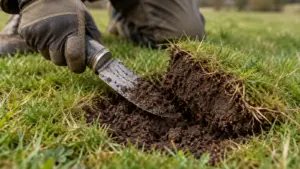
Yes, digging can leave visible damage if you remove too much turf or fail to replace it neatly. For park grass, use a compact hand digger for a small, controlled excavation, keep the plug intact, and return it to the hole when you’re done.
Can I use a regular garden shovel for metal detecting?
Yes, a garden shovel can work if its size and blade suit the target and soil. For careful recovery, a compact hand digger gives you more control; a longer shovel offers more use for deeper targets and tougher ground.
What is the best metal-detecting shovel for beginners?
A compact hand digger is a practical starting point because it suits small, careful excavations and is easier to position around a target. Choose a longer shovel if you expect deeper targets or tougher ground and want more use.
Should I use a shovel or a sand scoop at the beach?
Use a sand scoop for loose beach sand, where you can lift and sift the material around a target. Choose a shovel when you need to cut into firmer ground or open a deeper excavation; the right tool depends on the beach conditions and target depth.
How do I dig a clean plug in a park?
Cut a small plug with a compact hand digger, keeping the turf and roots together so you can return the piece after recovering the target. Work carefully around the target, replace the plug, and leave the surface level.
Conclusion
Choose the tool around your usual digging, then let ground and carrying comfort break the tie. For small, careful excavations, pick a compact hand digger such as the CKG Double-Serrated Digger. For deeper targets or tougher ground, choose a longer shovel with a footstep and a blade suited to roots.
If you walk long distances between targets, favor a lighter option; if you hunt tight spaces, avoid a long shaft. Before deciding, narrow your choices to the tools that fit your ground and preferred carry style.
Sources
- detectorbrief.com (detectorbrief.com)
- aquamarinepower.com (aquamarinepower.com)
- metaldetectorgearhq.com (metaldetectorgearhq.com)
- detectorcalc.com (detectorcalc.com)
- detecting.us (detecting.us)