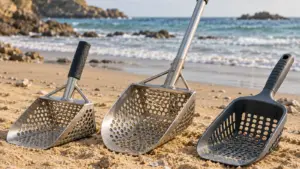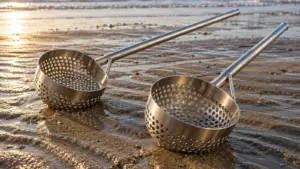
How to Choose a Sand Scoop for Metal Detecting
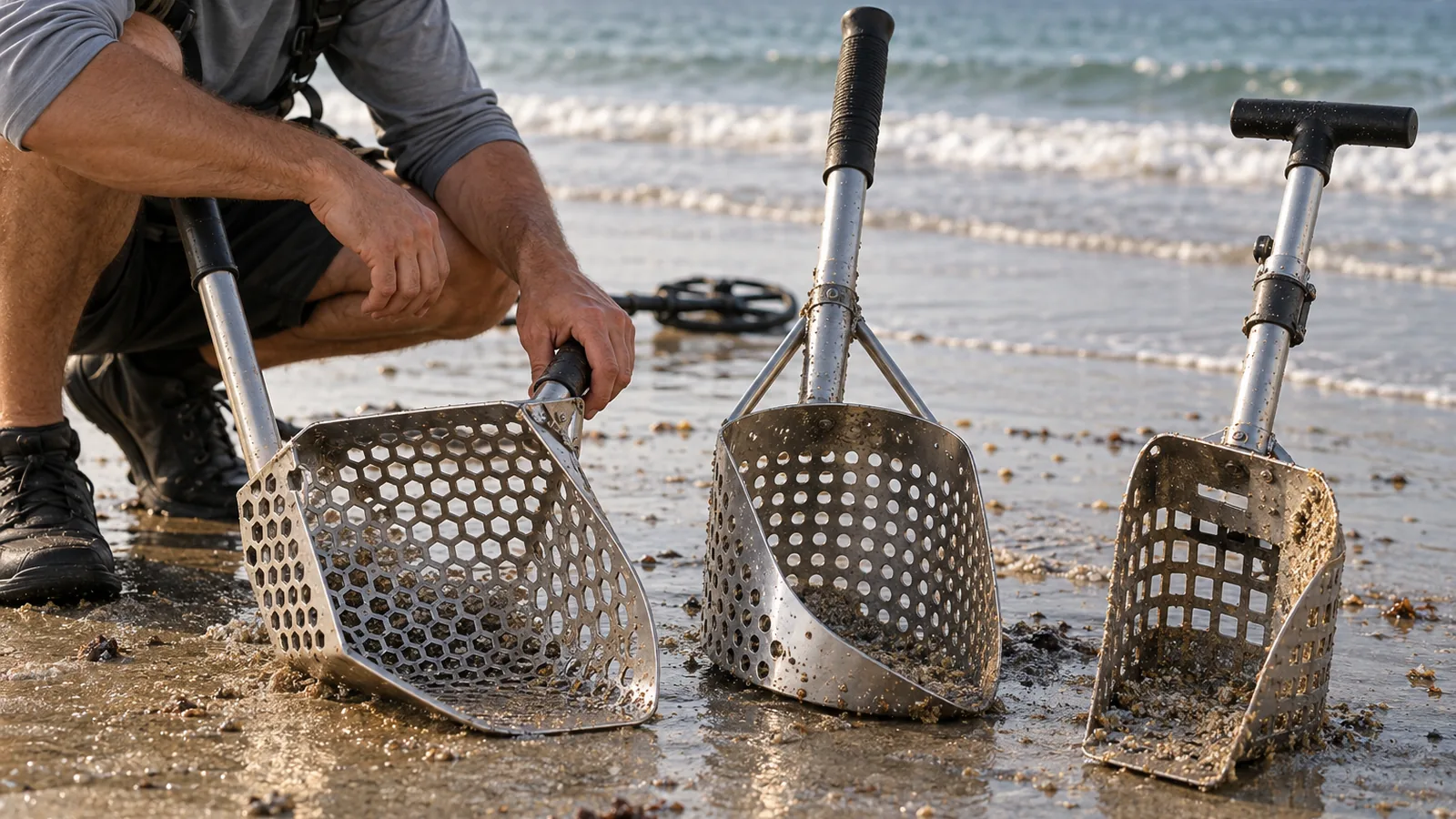
Choose a sand scoop by matching its material, basket openings, and handle to your beach conditions and the finds you want to recover. One quart of wet sand weighs about 4.3 lb, so a larger basket can make each lift heavy. For dry sand and kneeling, choose a lightweight scoop with a short handle; for wet sand or shallow water, choose a sturdier metal scoop with a longer handle.
How do you choose a sand scoop for metal detecting?
Quick answer: Match the scoop to where you detect, the targets you want to keep, and how you dig. Choose a lightweight, short-handled scoop for dry sand and kneeling; choose a sturdier, longer-handled metal scoop for wet sand or shallow water. Smaller openings help retain small finds, while larger openings sift faster.
- Match the material to the conditions: Plastic is lightweight and rust-free for dry sand; metal is the sturdier choice for wet, compact sand and shallow water.
- Choose basket openings for your targets: Retailer guidance suggests 8–10 mm for general beach use and 6–7 mm for thin chains; these are options, not a standard.
- Size the basket for the load: Typical examples are 4–5 inches wide and 1–2 quarts for dry sand, or 5–6 inches wide and 9–12 inches deep for wet sand and water. One quart of wet sand weighs about 4.3 lb.
- Fit the handle to your posture: Use a short handle for kneeling and a longer handle for reach and more upright digging; 42–48 inches is a typical length for wet-sand and water scoops.
- Check the build: Make sure the handle suits your stance and the joints and reinforced areas suit your digging demands.
How to choose a sand scoop step by step
Choose your detecting zone. For dry sand and kneeling recovery, consider a short handheld scoop; wet sand, surf, and water call for a longer, sturdier design that gives you more reach. A metal scoop is the tougher option for wet, compact sand, while plastic is lightweight and rust-free for dry-sand work.
Decide what targets you need to keep. Larger basket openings sift sand faster, while smaller openings can hold onto small finds such as thin chains but may take longer to sift. For general beach use, a retailer suggests 8–10 mm openings, and 6–7 mm for thin chains; treat those as guidance, not a standard.
Compare basket size with the load you can lift. A larger basket moves more sand per scoop, but wet sand makes that load heavier. Typical dry-sand baskets are 4–5 inches in diameter and hold 1–2 quarts; wet-sand and water examples are 5–6 inches in diameter and 9–12 inches deep. One quart of wet sand weighs about 4.3 lb, so account for the added weight before choosing a larger basket.
Match the handle to your posture. A short handle supports kneeling and compact recovery; a longer handle lets you reach farther and dig more upright, which can help in wet sand and water. Typical wet-sand and water scoop handles measure 42–48 inches.
Check how the scoop sifts. After lifting a target, gently shake the loaded scoop to let sand pass through its openings. Garrett’s metal beach scoop has 3/8-inch (9.5 mm) grating, which Garrett describes as retaining most coins and finds.
Check the build for your digging demands. Consider whether the handle suits your stance and whether the joints and reinforced areas are suited to the work. For shallow water, Garrett recommends its metal sand scoop; its plastic nugget scoop is not presented as the water choice.
Confirm the scoop suits more than one setting, if needed. Some designs are marketed for both dry and wet sand, but other guidance separates lightweight dry-sand scoops from tougher wet-sand options. If you detect across settings, compare the scoop’s stated use with the conditions you actually work in.
Match scoop design to beach conditions
Match the scoop to the sand and water you’ll recover targets from: use a light, short scoop for dry sand, and a sturdier, longer-handled scoop for wet sand or shallow water. Your footing and digging posture matter too, because wet sand loads can make a large basket heavy to lift.
- Dry sand: A lightweight, rust-free plastic scoop suits dry-sand recovery, especially when you’re kneeling and working close to the surface. A short handle keeps the scoop compact for that style of digging.
- Wet sand: Choose a more rugged metal scoop for compact, wet sand, where sturdier construction is useful. A longer handle gives you more reach and lets you dig from a more upright position.
- Shallow water: Use a metal scoop intended for water recovery, with a longer handle for reach and an upright digging posture. Garrett recommends its metal beach scoop for shallow water, while its plastic nugget scoop is not presented as the water option.
Stainless steel is also marketed for dry and wet sand, so one scoop may cover both conditions, but product claims aren’t independent comparative tests. Aluminum is another lightweight material option; its stated benefit comes from product or retailer descriptions rather than independent testing.
Basket size affects how much sand you lift, and wet sand makes each load heavier. According to MDH Talk, for wet sand or water, handbook examples use baskets 5–6 inches in diameter and 9–12 inches deep, while typical dry-sand examples are 4–5 inches in diameter with 1–2-quart capacity. Treat those as examples, not required dimensions. A larger basket can move more sand per scoop, but the heavier load may be harder to lift repeatedly, particularly when it’s wet.
Shake a loaded scoop gently to sift sand through its openings. Larger openings sift faster; smaller ones can help retain small targets but may slow sifting. Choose the opening with your likely finds in mind, then check that the scoop’s material and handle suit the conditions where you’ll use it.
Choose basket, handle, and material
Choose the basket, handle, and material by matching sifting speed, target size, working posture, and digging demands to the places you detect. Smaller openings retain small finds better, while larger openings let sand pass through faster.
For basket openings, weigh speed against the chance of losing a small target. A larger pattern can clear sand faster; a smaller pattern can hold thin or small finds, but may take longer to sift. Garrett describes its metal scoop’s 3/8-inch grating as retaining most coins and finds, while retailer guidance suggests 6–7 mm openings for thin chains and 8–10 mm for general beach use. Treat those opening sizes as options, not fixed rules: choose based on the finds you want to keep.
A larger load weighs more when wet, so consider how much sand you can comfortably handle during repeated recovery. A larger basket can move more sand per scoop, while a smaller one may be easier to manage; choose the trade-off that fits your digging and sifting pace.
Handle style and length should suit your working posture, and the joints and reinforced areas should match the digging demands. Longer, sturdier scoops are more useful in wet sand, surf, and water, while short handheld scoops suit dry sand and kneeling recovery. Some current options have fixed handles or two-piece travel handles, so consider storage and transport alongside how you’ll use the scoop.
Material choice also affects handling. Aluminum is lightweight, which may suit you if you want to reduce scoop weight; product and retailer guidance informs these descriptions, not independent comparisons. Compare construction and reinforcement against the conditions you’ll face instead of choosing by material name alone.
Compare scoop features at a glance
Compare material, basket, and handle together: each affects where you can work, what you can recover, and how much effort each scoopful takes. Use the table to narrow your choice to the conditions and targets you expect.
| Feature | Options in the research | Practical trade-off |
|---|---|---|
| Material | Aluminum is described as lightweight; Minelab markets stainless steel for dry and wet sand; Garrett recommends its metal scoop for shallow water | Lightweight construction can help with carrying; match the scoop to wet or water use rather than assuming every material suits it. |
| Basket | Larger openings sift faster; smaller ones can retain small targets, including thin chains. Guidance suggests 8–10 mm for general beach use and 6–7 mm for thin chains. | Smaller openings may slow sifting. Garrett’s metal scoop uses 3/8-inch grating and is described as retaining most coins and finds. |
| Basket size | Dry-sand examples: 4–5 inches in diameter, 1–2 quarts. Wet-sand and water examples: 5–6 inches in diameter, 9–12 inches deep. | A larger load weighs more, particularly when wet. |
| Handle | Typical wet-sand and water handle length: 42–48 inches. Listings include fixed 46-inch and 54-inch handles, plus a 46-inch two-piece travel handle. | Choose for your working posture; check that joints and reinforced areas suit the digging demands. |
The clearest choice depends on what you need to recover: a smaller opening favors retaining fine targets, while a larger one moves sand through faster. Wet sand increases load weight, so basket capacity matters as much as opening size when you expect to lift heavy scoops. Treat the opening-size figures as retailer guidance, not a universal standard. A handle’s listed length alone doesn’t tell you how it will fit your posture, so compare its style and construction with how you plan to dig.
Frequently Asked Questions
How do you use a sand scoop to recover a metal detecting target?
Dig sand from the target area into the scoop, then lift it and gently shake so sand falls through the basket openings. Check the remaining material for the target, and repeat with smaller loads if you don’t locate it; shaking helps sift sand while keeping finds in the basket.
How do you stop small finds slipping through a sand scoop?
Choose a basket with smaller openings, which can hold small finds such as thin chains, though the sand may sift more slowly. Retailer guidance suggests 6–7 mm openings for thin chains; treat that as a starting point and match the basket to the finds you want to keep.
How should I rinse and maintain a sand scoop after beach detecting?
Rinse the scoop with fresh water after beach use, then let it dry before storing it. Check the basket, handle, joints, and reinforced areas for wear or damage, since those parts should suit the digging demands you put on the scoop.
Can I use a sand scoop in saltwater without it rusting?
A plastic scoop won’t rust; stainless steel and titanium scoops are also available for saltwater detecting. Titanium is lighter, while stainless steel adds more digging weight; choose a scoop intended for saltwater use and rinse it after detecting.
What sand scoop size is allowed on public beaches?
Check the beach rules before choosing a scoop, since the right size depends on what the site permits and the conditions you’ll detect in. For practical sizing, handbook examples put dry-sand baskets at 4–5 inches in diameter, while wet-sand and water examples are 5–6 inches in diameter and 9–12 inches deep.
Conclusion
If you mostly detect dry sand and kneel to recover targets, choose a light scoop that feels easy to handle; if you work wet sand or shallow water, pick a sturdier scoop with more reach. For thin chains or other small finds, favor a tighter basket pattern; for faster sifting, choose larger openings.
Before buying, compare the scoop’s intended use, basket openings, load size, and handle with your usual detecting conditions and posture. If you detect across both dry and wet sand, check that the design is marketed for both, then prioritize the conditions where you spend the most time.
Sources
- The Beginner's Guide to Durable Sand Scoops for Metal Detecting (metaldetector.com)
- garrett.com (garrett.com)
- mdhtalk.org (mdhtalk.org)
- garrett.com (garrett.com)
- seriousdetecting.com (seriousdetecting.com)
- garrett.com (garrett.com)
- usa.minelab.com (usa.minelab.com)
- xtremescoops.com (xtremescoops.com)
- xtremescoops.com (xtremescoops.com)
- xtremescoops.com (xtremescoops.com)