What to Wear When Metal Detecting in Any Weather
For what to wear when metal detecting, start with 3 clothing basics: comfortable layers, sturdy boots, and gloves, then match your clothes to the weather and ground. If you’re detecting in cool weather, choose removable layers so you can take off your coat as you warm up.
What to wear when metal detecting?
Quick answer: Wear comfortable layers, sturdy boots, and gloves, then adjust for the weather and ground. In cool weather, choose a removable coat; in hot weather, wear light clothing and use sunscreen. Choose footwear for the terrain, and avoid steel toes and metal eyelets because they can interfere with detecting.
- Rough ground: Wear sturdy boots, gloves, and knee pads for protection.
- Wet areas: Choose old tennis shoes or rubber boots.
- Cold water: Wear hip- or chest-high waders with suitable underclothing.
- Carry gear: Keep recovered items in a waist- or belt-worn finds pouch.
How Should You Dress for a Detecting Trip?
Start with footwear and knee protection: sturdy boots and knee pads help protect you on the ground, while gloves protect your hands. Choose footwear without steel toes or metal eyelets, which can interfere with detecting.
Build your outfit in layers you can remove as you warm up. In cool weather, wear a comfortable base layer with a removable coat, rather than relying on one heavy layer. For warm weather, a T-shirt, shorts, and sneakers are one suggested setup. In hot weather, choose light, comfortable clothes and protect exposed skin with sunscreen; consider a hat or neck covering for sun protection.
Match coverage to the ground you’ll search. Long sleeves and pants can cover more skin, while gloves and knee pads add protection when you’re kneeling or handling rough ground. For detecting in cold water, use hip- or chest-high waders with suitable underclothing.
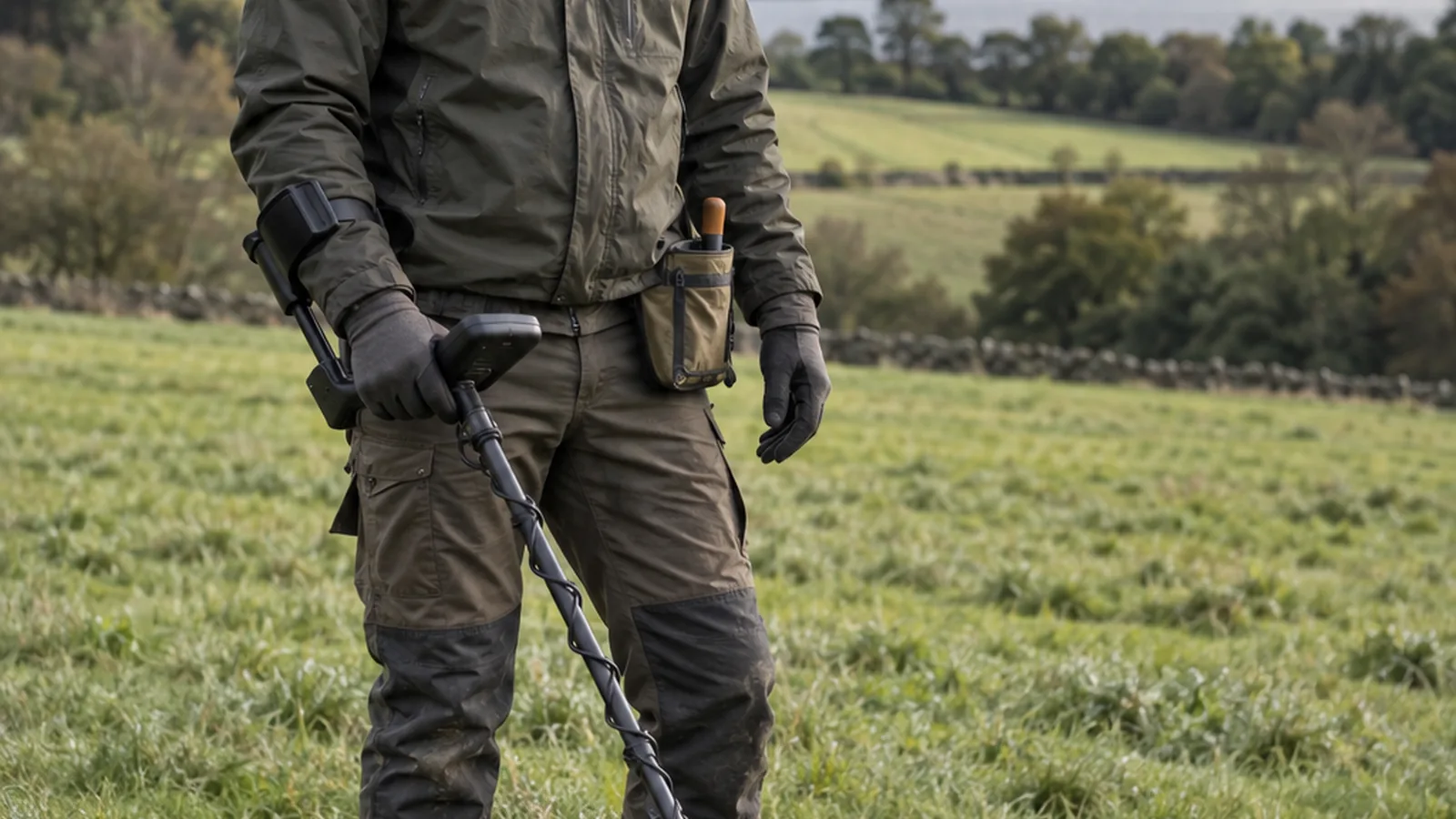
Keep your pockets or carry gear from getting in the way as you swing the detector. A waist- or belt-worn finds pouch can hold recovered items and small personal belongings. A tool belt with pouches on both sides is another reported option. A vest can add pockets, but may feel too warm in hot weather.
What Changes With Weather and Terrain?
What to wear when metal detecting changes with the heat, cold, rain, and ground underfoot: adjust your layers and footwear to the conditions, and keep protective gear in mind.
- Hot weather: Choose light, comfortable clothing, such as a T-shirt and shorts, and wear sneakers. Use sunscreen and consider a hat or neck covering for sun protection.
- Cool weather: Wear removable layers so you can take off your coat if you warm up while detecting.
- Wet areas: Old tennis shoes or rubber boots are options; choose based on the ground and how wet it is.
- Cold water: Garrett recommends hip- or chest-high waders with suitable underclothing for detecting in cold water.
For rough ground, sturdy boots, gloves, and protective knee pads provide added protection. Washington State Parks recommends these items and advises dressing for the weather. For wet or uneven ground, weigh the need for protection against the conditions: the guidance names sturdy boots for detecting generally, and old tennis shoes or rubber boots for wet areas.
Check your footwear for metal parts before heading out. Steel-toed footwear and metal eyelets can interfere with detecting, so avoid those features when possible.
If you want extra carry space without relying on a vest, one detectorist described using a tool belt with pouches on both sides.
Which Wearables Keep Gear Within Reach?
A belt or waist setup keeps a finds pouch and commonly used tools close at hand, with the exact arrangement depending on your preference and how much gear you carry. Keep essentials within reach by placing the items you use most often on your belt or in an accessible pouch.
For more storage, some detectorists use a tool belt with pouches on both sides. Others attach a pinpointer holster, finds pouch, and digging-tool holder to a belt.
- Finds pouch: Carry recovered items and small personal belongings at your waist or on your belt.
- Tool belt: Use pouches on both sides if that setup suits the gear you carry.
- Pinpointer and digging-tool holders: Attach dedicated holders to a belt alongside your finds pouch, if you prefer that arrangement.
There’s no single required layout: reported belt setups vary with personal preference and load. Keep the items you reach for most often in the easiest-to-access spots, and adjust the arrangement if your carried gear changes.
A vest is another option if you want extra pockets, but it may feel too warm in hot weather. For warm-weather detecting, Garrett recommends a T-shirt, shorts, and sneakers, which can pair with a belt pouch instead of a vest.
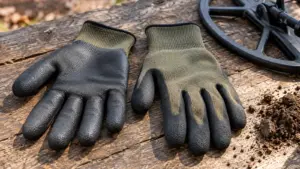
Gloves are optional: some detectorists wear them to protect their hands from dirt and sharp finds, while others prefer bare hands for tactile feedback. Choose based on whether hand protection or direct feel matters more for the finds and ground you expect.
Quick Clothing Picks by Conditions
These are practical starting points for what to wear when metal detecting.
| Condition | Clothing | Footwear |
|---|---|---|
| Hot | Light, comfortable clothing; sunscreen; consider a hat or neck covering | — |
| Cool | Removable layers, including a coat you can take off | — |
| Wet areas | — | Old tennis shoes or rubber boots |
| Cold water | Suitable underclothing | Hip- or chest-high waders |
In hot weather, avoid adding layers for extra pockets: vests can provide pockets, but they may feel too warm. For detecting with the Minelab GP Extreme, avoid steel-toed footwear and metal eyelets, which can cause interference. The wader recommendation applies to cold-water detecting, not general cold, dry ground. No specific clothing or footwear recommendation is established here for rough ground.
Frequently Asked Questions
What should you wear metal detecting in the rain?
Wear clothing suited to the temperature and ground, with rubber boots or old tennis shoes for wet areas. Choose footwear for the ground: for cold-water detecting, use hip- or chest-high waders with suitable underclothing, rather than treating ordinary rain as a reason to wear waders.
Do you need a waterproof jacket for metal detecting?
No, a waterproof jacket isn’t a requirement in the clothing guidance; dress for the weather and use removable layers in cool conditions. Choose a coat you can remove if you warm up while detecting, and match your footwear to the wet ground.
What socks are best for long metal detecting trips?
The guidance does not specify a sock material or thickness. For cold-water detecting, wear suitable underclothing beneath waders. Prioritize a comfortable fit: sturdy boots are recommended for detecting, but the guidance doesn’t specify a sock material or thickness.
How can you stay visible while metal detecting near roads?
The clothing guidance does not address visibility near roads.
What clothing helps prevent ticks and insect bites while detecting?
Long sleeves and pants can cover more skin. The guidance does not specifically address preventing ticks or insect bites.
Conclusion
If you expect heat or wet ground, choose light clothing or footwear suited to the conditions; if you expect cold or rough ground, prioritize removable layers and protection. Put your finds pouch and most-used tools where you can reach them without disrupting your swing, and leave out extra gear that adds heat or gets in the way.
Sources
- garrett.com (garrett.com)
- Metal Detecting | Washington State Parks (parks.wa.gov)
- minelab.com (minelab.com)
- garrett.com (garrett.com)
- garrett.cl (garrett.cl)
- metaldetectingforum.co.uk (metaldetectingforum.co.uk)
- metaldetectingforum.co.uk (metaldetectingforum.co.uk)
- reddit.com (reddit.com)
- usa.minelab.com (usa.minelab.com)
- themetaldetectingguy.com (themetaldetectingguy.com)