6 Best Multi Frequency Metal Detectors for 2026
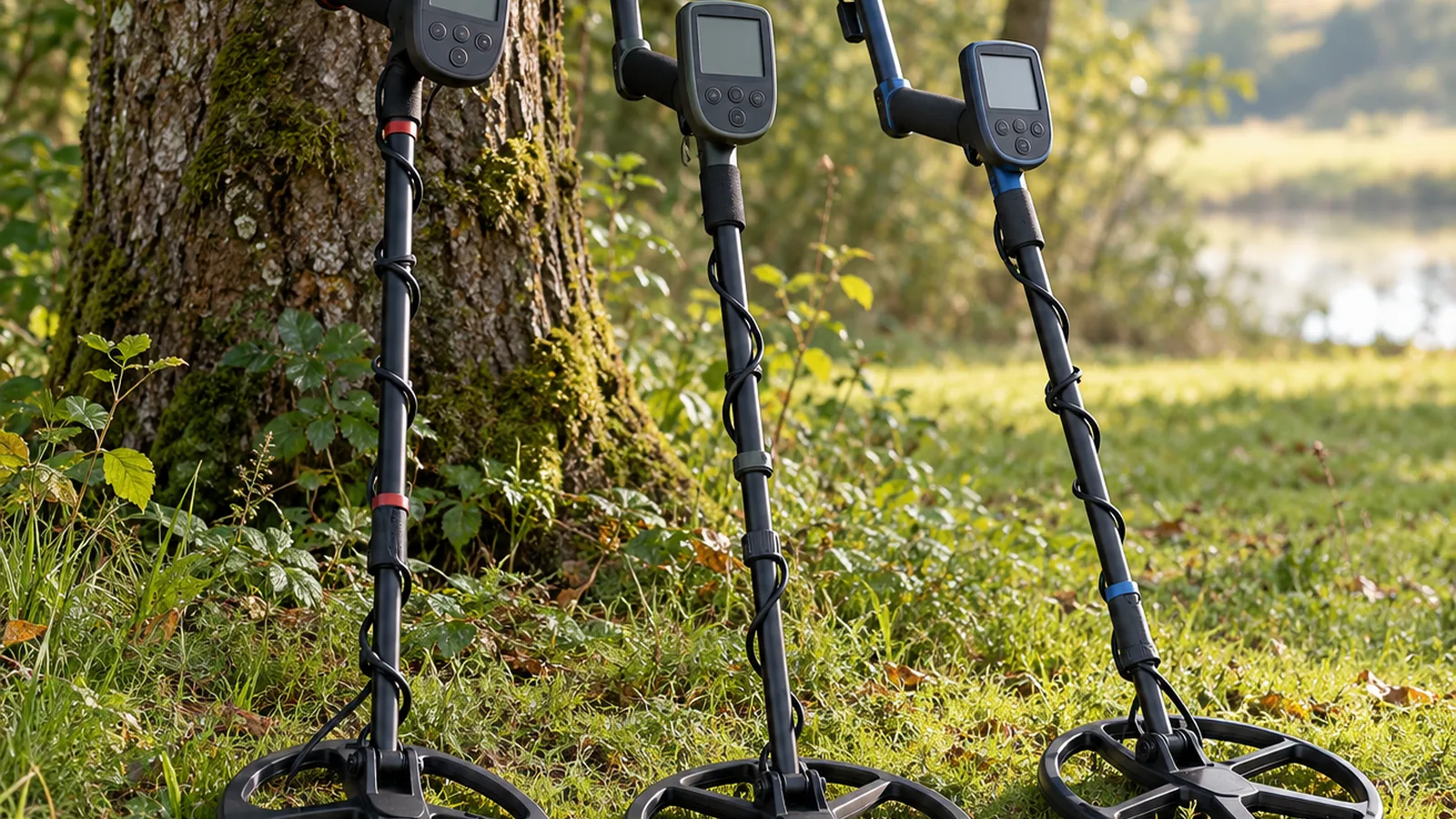
The Minelab X-Terra Elite Expedition is the best multi frequency metal detector for most land hunters, with Park, Field, and Beach modes and two included coils. Choose the XP Deus II for deep underwater relic hunting, or the Garrett ACE Apex if you want dedicated saltwater frequency options.
The main choice is between simultaneous multi-frequency operation and selectable single frequencies. Coil sizes affect coverage and control, while waterproof depth determines how far you can take a detector into the water.
Ground-balance options and search modes also matter: automatic setup is simple, while manual and tracking controls give you more ways to adjust to the ground. A waterproof coil doesn’t set the detector’s submersion depth.
The comparison table lays out each detector’s search coil size, shaft length range, and search modes.
Our top picks for multi frequency metal detectors
- Top pick: Minelab X-Terra Elite Expedition Metal Detector, for multi-terrain coin and treasure hunters who want Multi-IQ, two coil sizes, and waterproof operation
- Best for Automatic Setup Beginners: Minelab Vanquish 540 Multi-Frequency Metal Detector. For beginners and intermediate detectorists hunting parks, fields, coins, relics and beaches.
- Best for Portable Gold Prospecting: Minelab Equinox 900 Metal Detector. Built for detectorists who want a multi-frequency machine for parks, fields, beaches, and gold prospecting.
| Minelab X-Terra Elite Expedition Metal Detector |  | Best Overall | Search coil size: 8 x 5 in; 12 x 9 in DD elliptical | Shaft length range: 25-54 in | Search modes: Park, Field, Beach; 2 profiles each | VIEW LATEST PRICE | Read Our Analysis |
| Minelab Vanquish 540 Multi-Frequency Metal Detector | 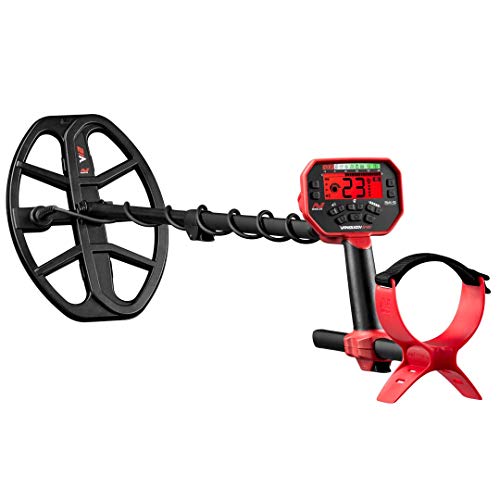 | Best for Automatic Setup Beginners | Search coil size: 12×9 in and 8×5 in DD | Shaft length range: 30–57 in | Search modes: 4: Park, Field, Beach, Custom | VIEW LATEST PRICE | Read Our Analysis |
| Minelab Equinox 900 Metal Detector |  | Best for Portable Gold Prospecting | Search coil size: 11-inch and 6-inch Double-D | Shaft length range: 24-56.7 in | Search modes: 4: Park, Field, Beach, Gold | VIEW LATEST PRICE | Read Our Analysis |
| XP Deus II Metal Detector |  | Best for Underwater Relic Hunting | Search coil size: 13 × 11 in elliptical | Shaft length range: 58–130 cm (23–51 in) | Search modes: 12 factory programs | VIEW LATEST PRICE | Read Our Analysis |
| Minelab Vanquish 360 Metal Detector |  | Best for Beginner Waterproof Parks | Search coil size: 10 × 7 in elliptical DD | Shaft length range: 31–56 in | Search modes: 3: All Metal, Beach, Park | VIEW LATEST PRICE | Read Our Analysis |
| Garrett ACE Apex Metal Detector |  | Best for Saltwater Beach Frequency Choice | Search coil size: 6 × 11 in DD | Shaft length range: 40–53 in | Search modes: 6 modes plus pinpoint | VIEW LATEST PRICE | Read Our Analysis |
How detector specs affect your hunt
Frequency handling and search modes
Simultaneous multi-frequency lets you keep one frequency approach as ground conditions change, while selectable single frequencies give you direct control over the operating frequency. Choose simultaneous operation if you want a consistent setup across different sites; choose selectable frequencies if you prefer to adjust the detector yourself. A detector can offer both approaches, so compare frequency handling separately from its search modes.
Search modes are preset ways to tailor the detector’s response to a hunt type. Treat them as setup shortcuts, not as extra frequencies: a Park or Beach mode describes a search setting, while a frequency option controls how the detector operates. More modes can make it easier to start with a relevant setup, but the useful question is whether the available modes match where you hunt.
Match modes to sites you actually visit. If you move between parks, fields, and beaches, look for modes built for those settings. If you prefer to adjust settings yourself, prioritize frequency choice and manual controls. A long mode list doesn’t mean better results. Modes and frequency options shape setup, but they don’t guarantee a find.
Coils, waterproofing, and pinpointing
Coil size affects coverage and control. A smaller coil is the practical choice for tight spaces, such as around obstacles or close to other targets; a larger coil covers more ground per sweep in open areas. Choose for the space you search most often, rather than treating one size as best for every site. Coil type and dimensions also matter because they affect how the detector fits your intended search area.
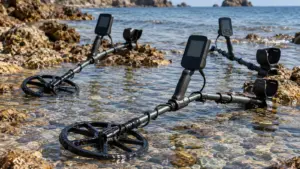
Waterproofing matters only for your planned use. For land hunting or shallow splashes, a submersion rating may not affect your decision. For wading or underwater searches, compare the stated depth with how deeply you plan to submerge the detector.
Depth rating should match submersion: a waterproof coil doesn’t mean the full detector is rated to the same depth. The Equinox 800, for example, is rated waterproof to 3 m (10 ft).
Pinpointing helps you narrow the target’s position before digging, which can make recovery more controlled. If you expect to recover targets in confined areas or want to limit the size of your dig, look for a dedicated pinpoint function. Think of it as a recovery aid, not a promise that every target will be located exactly.
Target IDs, ground balance, and audio controls
Target ID is a sorting aid. It gives you a reading to help judge a target before recovery, but use it as one clue rather than a guarantee of what’s underground. A wider ID scale may give you more displayed values to interpret; the better fit depends on whether you want more detail or a simpler readout. Gain affects how strongly the detector responds, so adjust it to suit your site rather than assuming the highest setting is always best.
Ground balance helps you set the detector to the ground you’re searching. Automatic adjustment is useful when you want a quicker setup; manual adjustment gives you direct control, while tracking can follow changing ground conditions. Choose the balance method you’ll use: a choice of methods matters most if you expect to adjust for different soil or want control over the setup.
Audio controls affect how you hear and sort targets. Iron volume lets you reduce or adjust iron responses, while tone breaks and notch filters change how target ranges are presented or accepted. Wireless audio can reduce the need for a cable between headphones and detector, which may suit hunters who value fewer wires; it doesn’t change what a target is.
Prefer simple audio if you want fewer adjustments, or more controls if you plan to shape the sounds to your preferences. None of these settings guarantees a find.
More Details on Our Top Picks
Minelab X-Terra Elite Expedition Metal Detector
Pros: Good depth and target identification at depth · Owner describes the detector as comfortable and lighter than their E-Trac · The V8X coil handled most test targets well.
Cons: Deep bottle caps can give IDs similar to zinc pennies · A 10-inch-deep dime produced a one-way hit with the V8X coil.
Skip it if: you need reliable separation between deep bottle caps and zinc pennies.
For multi-terrain coin and treasure hunters, the X-Terra Elite Expedition is the all-around choice for land and water. Multi-IQ works across Park, Field, and Beach, with two profiles for each.
Automatic, manual, and tracking ground balance give you room to adjust as conditions change.
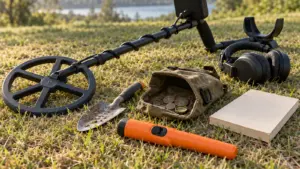
At 2.9 lb, it has a 25-54 in shaft range, and the included ML 85 headphones use low-latency wireless audio. The PRO-FIND 40 pinpointer uses DIF technology to reduce interference. Deep bottle caps can produce IDs similar to zinc pennies, so deep-target IDs can mislead when you’re deciding whether to dig.
- Search coil size:8 x 5 in; 12 x 9 in DD elliptical
- Shaft length range:25-54 in
- Ground balance:Auto, manual, tracking
- Search modes:Park, Field, Beach; 2 profiles each
- Weight:2.9 lb
- Power source:3.7 V, 5100 mAh rechargeable Li-ion
Minelab Vanquish 540 Multi-Frequency Metal Detector
Five-frequency Multi-IQ suits park, field, and beach hunters who want beginner-friendly automatic setup without choosing a frequency. The Vanquish 540 selects settings for the soil, so you can start hunting without manual ground balancing. Its four search modes cover Park, Field, Beach, and Custom, while dedicated Pinpoint Mode helps locate a target. A red-backlit display supports low-light use, and included Bluetooth headphones provide wireless audio.
You get two DD coils, a 12×9-inch coil for broader coverage and an 8×5-inch coil for tight or trashy spots. The detector weighs 2.8 pounds, adjusts from 30 to 57 inches, and collapses to 30 inches for transport. It runs on 4 AA rechargeable NiMH batteries.
Iron Bias has High and Low settings, and owners report clear tones and comfortable balance during long hunts. The control box is water-resistant, but isn’t waterproof for submersion, limiting fully underwater use.
Pros: Owner-reviewer reports stable operation on wet salt sand · Owner-reviewer praises clear tones and beginner-friendly controls · Owner-reviewer says the two-coil kit helps in trashy parks and tight spaces.
Cons: Control box is not waterproof for submersion · Owner-reviewer wanted a more robust-feeling coil bolt.
Look elsewhere if: you need a detector whose control box can be submerged.
- Search coil size:12×9 in and 8×5 in DD
- Shaft length range:30–57 in
- Ground balance:Automatic
- Search modes:4: Park, Field, Beach, Custom
- Weight:2.8 lb
- Power source:4 AA rechargeable NiMH
Minelab Equinox 900 Metal Detector
Gold prospectors wanting a compact detector with a dedicated Gold mode and frequency choices get a portable fit here. The Minelab Equinox 900 runs Multi-IQ across multiple frequencies or offers six single frequencies from 4 to 40 kHz. Its 3-piece carbon-fiber shaft folds to 24 inches, and the 2.8-pound weight helps keep the setup manageable on long walks.
Choose the 11-inch coil for general hunting or the included 6-inch coil for tighter spaces and small targets. Park, Field, Beach, and Gold modes cover varied ground, and the detector is submersible to 16 feet.
Setup gives you two coil sizes and automatic, manual, or tracking ground balance. Owners value its coin accuracy, depth, and target separation in iron-heavy areas, while reports also praise its performance on dry and wet sand. The built-in flashlight and handgrip vibration help in low light.
A 119-segment Target ID adds detail when sorting signals, though beginners may need time to learn the extensive controls. Iron can also produce convincing false signals, so listen carefully before digging.
Pros: Useful performance on dry and wet sand · Its coin-finding accuracy and depth · Owners value the included 6-inch coil for small targets.
Cons: Iron can produce convincing false signals · The extensive controls take time for beginners to learn.
Not the right pick if: you want a detector with simple controls that a beginner can learn quickly.
- Search coil size:11-inch and 6-inch Double-D
- Shaft length range:24-56.7 in
- Ground balance:Automatic, manual, tracking
- Search modes:4: Park, Field, Beach, Gold
- Weight:2.8 lb
- Power source:3.7 V, 5100 mAh lithium-ion
XP Deus II Metal Detector
Unlike the Equinox 900, the XP Deus II suits experienced hunters pursuing underwater relics with a lightweight, configurable setup. Its IP68 rating to 20 m (66 ft) supports underwater use, and the included 13 × 11 in FMF coil gives relic hunters a broad search footprint. Choose among 12 simultaneous multi-frequency programs or 49 single frequencies from 4 to 45 kHz, then tailor the four-band equalizer and ground balance to your hunt.
At 2.2 lb, it has a light swing weight and a telescopic S-shaped shaft that packs from 58 to 130 cm. Wireless WS6 headphones come included, and the coil runs 8–20 hours depending on program and frequency. The menus can feel complicated, and some owners find the remote’s recessed display small. Its wireless setup and compact packing suit hunts that move between land, beach, and underwater sites.
Pros: Its light swing weight · Owners value compact packing and wireless operation · Configurable audio.
Cons: Owners find the menus complicated · Some criticize the remote’s small recessed display.
Pass on it if: you want simple controls, since owners find its menus complicated.
- Search coil size:13 × 11 in elliptical
- Shaft length range:58–130 cm (23–51 in)
- Ground balance:Tracking, Grab, Manual
- Search modes:12 factory programs
- Weight:2.2 lb
- Power source:Rechargeable lithium batteries
Minelab Vanquish 360 Metal Detector
Beginners who want a waterproof detector for parks will appreciate this lightweight Multi-IQ choice. The 2.6 lb Vanquish 360 runs multiple frequencies at once, so you don’t switch frequencies between hunts. Choose Park, Beach, or All Metal mode, then use the 119 target IDs and six discrimination segments to judge signals.
Its dedicated Pinpoint mode helps you locate a target after detection. The included 10 × 7 in waterproof coil suits parks, fields, and beaches, while submersion up to 16 ft adds shoreline and shallow-water use.
The built-in rechargeable battery runs for up to 10 hours, and the shaft adjusts from 31 to 56 in. Owners describe the controls as intuitive and handling as comfortable, with clear signals and useful target identification. One owner found the coil-joining bolt came loose and was lost, so keep track of that small part during setup and transport.
Wired headphones can snag while you’re detecting, and the detector can be awkward to carry by bicycle.
Pros: Owner found it intuitive and easy to use · Owner reported comfortable handling at 2.6 lb · Owner used it on beaches and fields.
Cons: Owner reported the coil-joining bolt came loose and was lost · Wired headphones can snag during detecting.
Think twice if: you need a detector that packs easily for bicycle transport.
- Search coil size:10 × 7 in elliptical DD
- Shaft length range:31–56 in
- Ground balance:—
- Search modes:3: All Metal, Beach, Park
- Weight:2.6 lb
- Power source:Built-in rechargeable lithium-ion; up to 10 h
Garrett ACE Apex Metal Detector
Owners report a comfortable, lightweight swing, and beach hunters can choose among four single frequencies, Multi-Frequency, or Multi-Salt. Its 6 × 11 in Viper DD coil balances sweep coverage with target separation, while automatic ground balance offers 175 points. Six modes cover Zero, Coins, US Coins, Jewelry, Relics, and Custom, with pinpoint also available.
The 2.5 lb detector has a built-in rechargeable lithium-ion battery rated for up to 15 hours per charge and an adjustable shaft from 40 to 53 in. Its backlit LCD shows target IDs from 0 to 99, and integrated Z-Lynk provides wireless audio. Owners find the controls intuitive, but report chatter at high sensitivity in some soils and possible electrical interference. The control box is rainproof, not waterproof, so keep it out of the water at the beach.
Pros: Lightweight and comfortable to swing for extended hunts · Simple controls and intuitive menu · Multi-Salt mode performed quietly on wet and dry beach sand.
Cons: Can produce chatter at high sensitivity in some soil conditions · May be susceptible to electrical interference.
Skip it if: choose another detector if you need a control box that can be submerged.
- Search coil size:6 × 11 in DD
- Shaft length range:40–53 in
- Ground balance:Automatic, 175-point resolution
- Search modes:6 modes plus pinpoint
- Weight:2.5 lb
- Power source:Built-in rechargeable lithium-ion, 7.5 Wh
Multi Frequency Metal Detectors: Key Specs Side by Side
Here is how the 6 picks line up on search coil size, shaft length range, ground balance, search modes and weight. Cells marked with a dash are specs the maker leaves out of its listing.
| Pick | Search coil size | Shaft length range | Ground balance | Search modes | Weight |
|---|---|---|---|---|---|
| Minelab X-Terra Elite Expedition Metal Detector | 8 x 5 in; 12 x 9 in DD elliptical | 25-54 in | Auto, manual, tracking | Park, Field, Beach; 2 profiles each | 2.9 lb |
| Minelab Vanquish 540 Multi-Frequency Metal Detector | 12×9 in and 8×5 in DD | 30–57 in | Automatic | 4: Park, Field, Beach, Custom | 2.8 lb |
| Minelab Equinox 900 Metal Detector | 11-inch and 6-inch Double-D | 24-56.7 in | Automatic, manual, tracking | 4: Park, Field, Beach, Gold | 2.8 lb |
| XP Deus II Metal Detector | 13 × 11 in elliptical | 58–130 cm (23–51 in) | Tracking, Grab, Manual | 12 factory programs | 2.2 lb |
| Minelab Vanquish 360 Metal Detector | 10 × 7 in elliptical DD | 31–56 in | — | 3: All Metal, Beach, Park | 2.6 lb |
| Garrett ACE Apex Metal Detector | 6 × 11 in DD | 40–53 in | Automatic, 175-point resolution | 6 modes plus pinpoint | 2.5 lb |
Chart of the table above.
Choose by your hunting conditions
For parks, fields, and general treasure hunting
Choose a setup that fits the ground and targets you expect to cover.
- Match modes to ground: Look for separate options for parks, fields, and beaches if you move between those settings. A mode tailored to the ground can make switching sites simpler.
- Favor flexibility: If your hunts vary, a detector that offers multi-frequency operation plus selectable single frequencies gives you more ways to adapt.
- Avoid mode-counting: A long mode list matters less than having settings that match the places you hunt.
For saltwater and underwater searches
For wet sand or submersion, prioritize saltwater capability and a stated depth rating.
- Saltwater handling: Look for a Beach or Multi-Salt mode when you plan to hunt saltwater ground. Beach-specific search modes are one example of adapting a detector to different ground conditions.
- Water rating: Match the detector’s stated depth limit to how you’ll use it. A rating of 3 m (10 ft) supports submersion within that depth.
- Separate wet sand from diving: A beach mode and a water-depth rating answer different needs. Choose based on whether you’ll search wet sand, shallow water, or submerge the detector.
For tighter sites and more adjustment
In cluttered places, favor the ability to adjust how the detector responds to iron and ground conditions.
- Iron response: Iron-volume controls let you adjust the sound of iron targets, while tone-break controls set where target sounds change.
- Ground balance: Automatic, manual, and tracking options give you different ways to respond to changing ground.
- Frequency control: Selectable single frequencies suit hunters who want direct control over operating frequency; multi-frequency operation offers another way to adapt a setup.
- Pick for the control you’ll use: The Equinox 900, Deus II, and ACE Apex are options to compare for control-focused hunting, but choose by the specific adjustments that matter to you.
Search coil size
Choose coil size around the amount of space you need to cover and the room you have to maneuver.
- For open ground: A larger coil can be a practical priority when covering broad, open areas.
- For tight spots: A smaller coil can be easier to work around obstacles and targets close together.
- Match coil to the site: If your hunts include both open ground and clutter, consider how well the supplied coil fits your most common locations.
Coil size is only one part of the decision. Pair it with the detector’s modes and controls for the ground you hunt most often.
Frequently Asked Questions
Do multi-frequency metal detectors find gold better than single-frequency models?
Multi-frequency operation alone doesn’t guarantee better gold finds; coil choice, ground conditions, and detector settings also affect how well you can detect and assess a target. For gold prospecting, choose a detector with a dedicated Gold mode or selectable frequencies that fit your hunting approach, then use target IDs and audio as clues rather than proof of what’s underground.
Do I need permission to metal detect in public parks?
Rules depend on the park and the land manager, so get permission before detecting and follow any limits on digging or removing finds. A detector’s Beach or Park mode describes its search setup, not permission to search a site.
How do I recover targets without damaging lawns or fields?
Pinpoint the target, then keep the recovery opening as small as you can and return the plug and soil neatly. A dedicated pinpoint function helps narrow a target’s position before you dig, while a smaller coil can help you work around obstacles or close-set targets.
What is the difference between VLF and multi-frequency metal detectors?
VLF describes a detector type, while multi-frequency describes how a detector operates across frequencies. A VLF detector can offer selectable frequencies, as the Nokta Impact does with 5, 14, and 20 kHz; Multi-IQ can also provide simultaneous multi-frequency operation.
Should beginners choose a multi-frequency detector or a simpler model?
Choose a multi-frequency detector if you hunt varied sites and want one setup to suit changing conditions; choose a simpler model if fewer controls make learning easier. Automatic ground balance can reduce setup steps, while manual frequency selection and balance controls give you more direct control.
Conclusion
If you move between land and water sites and want two coil sizes, choose the X-Terra Elite Expedition. Pick the Vanquish 540 for automatic setup, the Equinox 900 for selectable frequencies and gold hunting, or the Deus II for underwater relic searches and deeper manual control. Start by choosing your main hunt type, then compare the coil sizes and ground-balance controls that fit your usual sites.
Sources
- minelab.com: EQUINOX 800 Tech Specs
- noktadetectors.com: Impact PRO
- Zboží.cz: Minelab Equinox 900 od 27 990 Kč
- xpmetaldetectors.com (https://www.xpmetaldetectors.com/en/gamme/deus-ii-detectors.php)