What Accessories Do You Need for Metal Detecting?
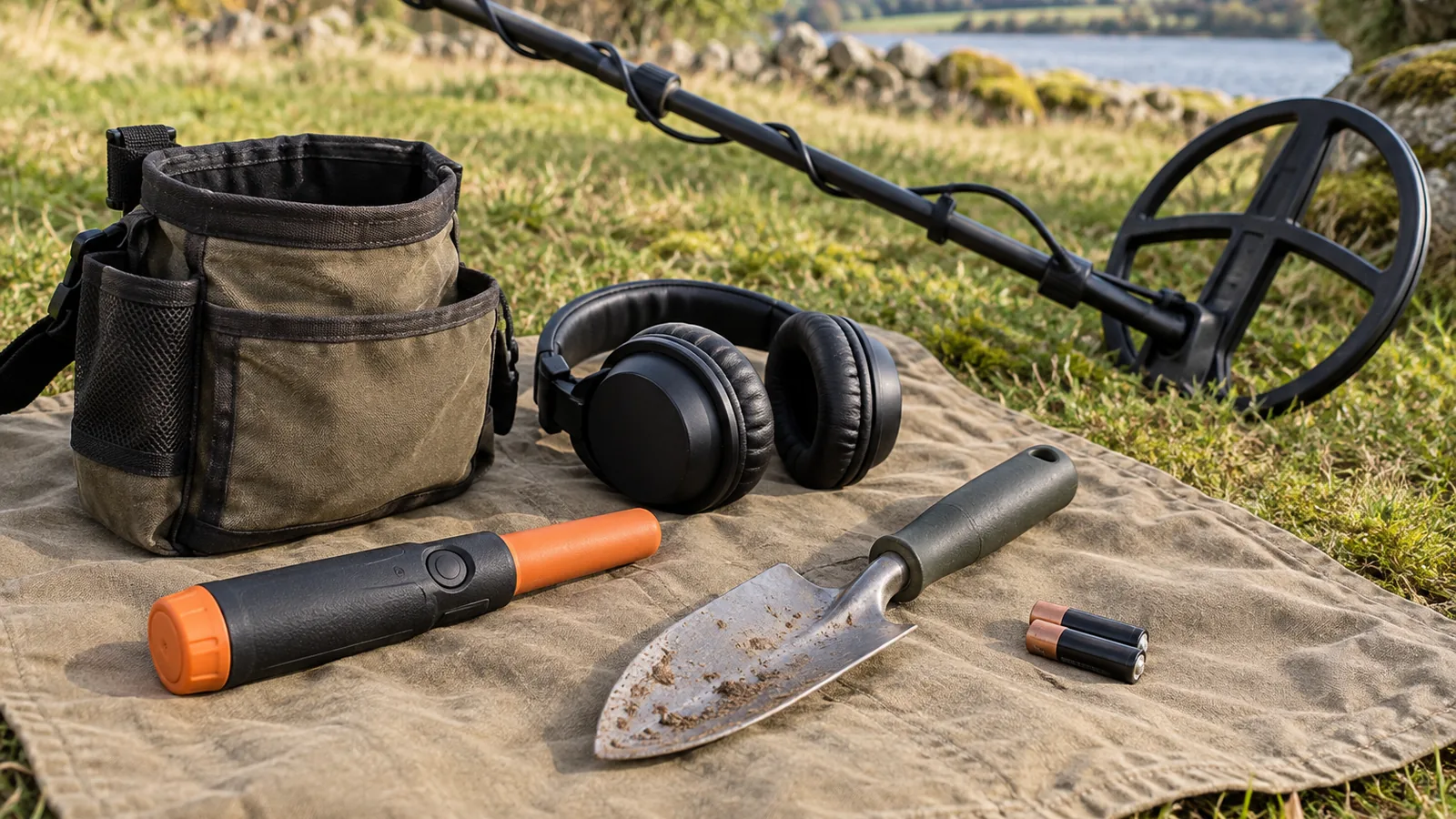
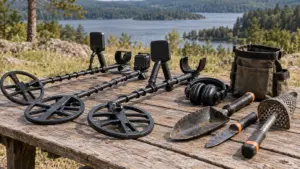
For metal detecting, you need 3 core accessories: a pinpointer, a permitted digging tool, and a pouch for finds and trash. Choose your digger for the site’s rules and surface, and check that headphones and power accessories match your detector model.
What accessories do you need for metal detecting?
Quick answer: Pack 3 essentials: a pinpointer to narrow down targets in a hole or loose soil, a permitted digging tool to retrieve them, and a pouch for finds and trash. Choose the digger for the site’s surface and rules, and check that any headphones, batteries, charger, or adapter you bring match your detector.
- Pinpointer: Locate a target in a hole or loose soil.
- Digging tool: Use a tool allowed at your site, such as a sand scoop for beach detecting.
- Finds and trash pouch: Carry recovered items and trash; separate compartments keep them apart.
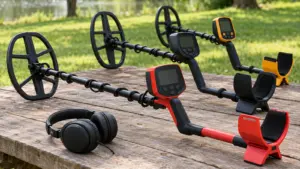
- Optional extras: Bring compatible headphones, fresh or charged batteries, and a charger if your detector uses one.
- For transport or delicate finds: Use a carry bag for your detector and a finds box to protect delicate items in storage.
Pack the Essential Recovery Tools
A pinpointer narrows a target’s location in a hole or loose soil, while a digger retrieves it and a pouch carries recovered items and trash.
| Tool | Use |
|---|---|
| Pinpointer | Narrow down a target in a hole or loose soil |
| Digger | Retrieve a target from the ground |
| Finds or trash pouch | Carry recovered items and trash |
Use your digger only where the site’s rules permit it, since allowed tools vary by location. Garrett’s beach scoop has a rounded lip and 3/8-inch grating. A belt- or thigh-worn pouch keeps recovered items and frequently used tools close at hand.
A pouch with separate compartments helps keep finds apart from trash, and a finds box can protect delicate items during storage.
How Should You Prepare Your Detector?
Check the battery. Before leaving, confirm your detector’s batteries are charged or fresh. Pack the correct spare batteries or charger only if your detector uses them; battery and charger needs vary by model.
Assemble the detector. Fit its parts according to the instructions for your specific model. Detector setup can differ: for example, the Minelab SDC 2300 manual specifies keeping the coil away from metal before switching on and describes noise-cancel and ground-balance steps.
Pack compatible headphones. Headphones help you hear detector signals, but the headphones and any adapter must match your detector model. Check whether your headphones are suitable for the conditions you expect. For the Garrett AT Max, its supplied wireless headphones must not be submerged; use wired waterproof headphones if submerging the control housing.
Bring the recovery gear. Keep your recovery tools with your detector so they’re ready when you locate a target.
Do a final power-on check. Follow your detector’s startup and setup instructions, including any model-specific steps, before you begin searching. If something doesn’t respond as expected, check that the batteries and accessories are compatible with your detector.
Choose Gear for Your Hunting Location
Choose your digging tool, footwear, and weather protection based on the site’s surface, rules, and conditions; the site sets the tool choice. The answer to what accessories do you need for metal detecting can change with the ground underfoot and the rules for that location. Check permission requirements, weather, and ground conditions before you go.
- Turf and vegetation: Check the local rules before packing a shovel or trowel. Pennsylvania State Parks prohibit shovels, spades, and garden trowels in turf, vegetation, shrubs, and trees, while allowing narrow-pronged tools such as screwdrivers and ice picks. Portland’s park policy allows certain hand tools and limits turf plugs to 6 inches (15.2 cm) in diameter and 6 inches (15.2 cm) deep.
- Sand: A sand scoop may suit beach detecting; Garrett describes its scoop as a beach tool with a rounded lip and 3/8-inch grating. Washington State Parks limits sand scoops to 6 inches (15.2 cm) wide by 8 inches (20.3 cm) long.
- Rough, wet, or muddy ground: Choose sturdy footwear and clothing suited to the conditions, and consider work gloves to protect your hands from sharp finds and debris.
Rules differ by site, so check whether your tool is allowed at each park. Check tool limits first: Washington State Parks also limits probes to 2 inches (5.1 cm) wide. Choose gear that meets local rules and suits the ground you expect to work.
Carry and Care for Your Finds
Carry recovered items in a pouch, and use a finds box for delicate pieces you want to protect during storage.
A pouch worn on your belt or thigh keeps recovered items and frequently used tools close at hand.
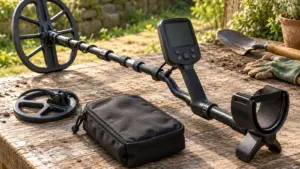
Use a carry bag to protect and transport your detector. A light daypack can carry water, snacks, and extra layers on longer outings. A daypack is optional: it’s useful for longer outings, while the pouch and finds box serve the separate jobs of carrying recovered items and protecting delicate ones.
Frequently Asked Questions
Are gloves useful when metal detecting?
Yes, work gloves can protect your hands from sharp finds and debris, especially on rough or muddy ground. Choose gloves suited to the conditions, and keep them comfortable enough to handle your detector and digging tool.
Should I bring knee pads for metal detecting?
Knee pads can add comfort if you expect to kneel often, but the supported gear guidance focuses on gloves, sturdy footwear, and weather-appropriate clothing for rough, wet, or muddy ground. Prioritize those items, then bring knee pads if kneeling is likely to be uncomfortable.
How can I protect my detector during transport?
Carry your detector in a padded bag to protect it during transport and storage. Keep smaller accessories together in the bag or a daypack, and check that the coil connector is secure and the coil cover is free of dirt or water before use.
What should I pack for metal detecting in the rain?
Pack weather-appropriate clothing and sturdy footwear, plus a padded carry bag to protect your detector during transport. Check the forecast and ground conditions before you leave, and make sure any headphones match your detector and the conditions you expect.
Should I carry a first-aid kit while metal detecting?
Yes, carrying a first-aid kit is a sensible precaution, especially on outings where help may be far away. Work gloves can reduce contact with sharp finds and debris, and sturdy footwear suits rough or muddy ground.
Conclusion
If you’re detecting on turf or in a park, check the site rules before choosing a digger; for sand, pack a scoop that meets local limits. Start with a pinpointer, a permitted digging tool, and a pouch that separates finds from trash. Then check your detector’s instructions and pack only compatible batteries, chargers, headphones, or adapters. Before you leave, confirm the location’s rules and conditions, then set out the gear you’ll actually use.
Sources
- Garrett Treasure Hunter’s Guide – Garrett Direct (garrett.com)
- metaldetectingexperiencedays.com (metaldetectingexperiencedays.com)
- detectoristguide.com (detectoristguide.com)
- noktadetectors.com (noktadetectors.com)
- noktadetectors.com (noktadetectors.com)
- pa.gov (pa.gov)
- portland.gov (portland.gov)
- garrett.com (garrett.com)
- metaldetector.com (metaldetector.com)
- metaldetectorpros.com (metaldetectorpros.com)
- garrett.com (garrett.com)
- usa.minelab.com (usa.minelab.com)
- parks.wa.gov (parks.wa.gov)
- md-hunter.com (md-hunter.com)