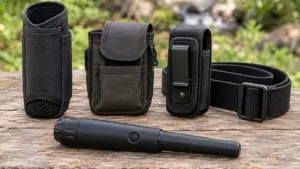
Do You Need a Pinpointer for Metal Detecting?
No, you don’t need a pinpointer for metal detecting: there’s no set hole depth, target size, or number of finds that makes one necessary. It can speed up recovery in a tight plug, deep hole, or loose soil. If you don’t carry one, use your detector’s searchcoil to check the hole and sift the excavated soil.
Do you need a pinpointer for metal detecting?
Quick answer: No. A pinpointer is optional: it helps you locate a target in a removed plug or loose soil, or check whether it remains in the hole. After digging, scan the plug or soil first, then check the hole’s bottom and sidewalls if the pinpointer doesn’t signal. If you don’t carry one, pass handfuls of soil about 2 inches (5.1 cm) in front of your detector’s searchcoil; it’s most useful when you want more precise recovery from a tight plug, deep hole, or loose soil.
The short answer
A handheld pinpointer narrows the target’s location in the hole or removed plug, helping you identify where to recover it.
| Method | Distance from search coil |
|---|---|
| Pass a handful of soil in front of the coil | 2 inches (5.1 cm) |
The distance applies to checking soil with your detector coil, a workable alternative when you don’t carry a pinpointer.
How does a pinpointer help recover targets?
A handheld pinpointer helps you narrow down where a detected target is in the hole, plug, or loose soil, so you can recover it without searching the whole area by hand.
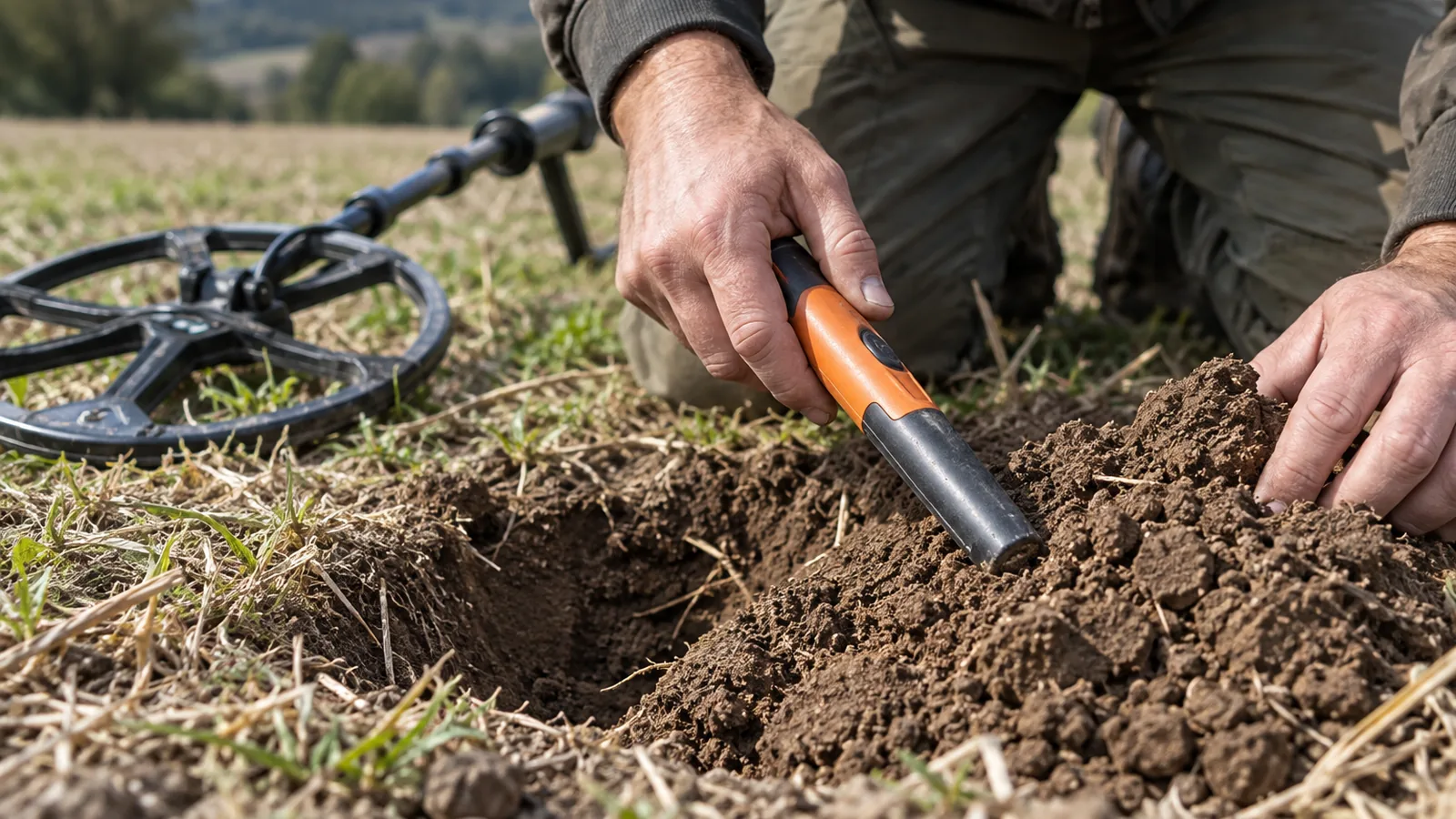
After you remove a plug, scan the plug or excavated soil with the pinpointer first. If it signals, focus your search on that material; if it doesn’t, scan the bottom and sidewalls of the hole. This check helps you tell whether the target came out with the plug or remains in the ground.
A pinpointer can be especially useful when the target is in a tight plug, deep hole, or loose pile of soil, because it lets you search a smaller area more precisely. That precision may reduce the need to dig further. Move the pinpointer through the material you’re checking, narrowing the search to the part that gives a signal. Once you’ve isolated that part, keep searching there rather than spreading the soil across a larger area.
Can you metal detect without a pinpointer?
Yes, you can detect without a pinpointer: use your detector’s searchcoil to check the hole and excavated soil, then separate the soil carefully until the target signals again. This method works, though it can take longer and feel less convenient than pinpointing the target by hand.
Check the hole with your detector. After removing the plug, scan the hole’s bottom and sidewalls with the searchcoil. If the target still signals, adjust your digging and check the hole again rather than searching soil that doesn’t contain it.
Scan a handful of removed soil. Hold a small amount of soil about 2 inches (5.1 cm) in front of the searchcoil and move it across the coil until the detector signals. Remove rings, bracelets, or other metal from the hand holding the soil, since they can interfere with the search.
Divide a larger pile into portions. Pass each portion over the searchcoil and set aside soil that doesn’t signal. Repeat with the portion that does, narrowing down which soil contains the target.
Spread soil thinly if sorting is awkward. Lay the excavated soil out in a thin layer and scan it with the coil. This gives you another way to isolate a signal without a pinpointer, although you’ll still need to handle and rescan the soil as you narrow the search.
The coil method is workable, but you’ll handle the soil yourself. A handheld pinpointer can help distinguish a target in the removed plug from one still in the hole, then narrow its location for recovery. The available guidance doesn’t set a hole depth, target size, or number of finds at which a pinpointer becomes necessary, so the choice depends on how much extra sorting you’re willing to do.
When is a pinpointer worth carrying?
A pinpointer is worth carrying when you want to locate a target more precisely in a tight plug, deep hole, or loose excavated soil. It can help you narrow the search area and may reduce the need to dig further.
The clearest benefit is faster, more precise recovery from soil you’ve already removed. Tight plugs and loose soil can be harder to search by eye and by detector coil alone, so a handheld tool can make pinpointing the target’s location more direct.
Consider carrying one if your detecting often leaves you searching inside a small plug, a deep hole, or loose soil. Those are situations where precise recovery can help you avoid further digging. Your detecting style matters, since the available guidance describes useful situations but sets no threshold for when a pinpointer becomes necessary.
The choice is personal: weigh the time and effort you want to spend searching recovered soil against carrying another tool. A pinpointer is an optional aid for recovery, so you can leave it behind and still detect metal.
Frequently Asked Questions
Can a pinpointer detect metal on its own?
No, a handheld pinpointer is for narrowing down a target your main detector has already found, rather than searching an area for targets. Once you’ve dug, use it to check the removed plug or soil, then the hole if the soil doesn’t signal.
Should a beginner buy a pinpointer right away?
No, you can start detecting without one and use your detector’s searchcoil to check the hole and sort through the excavated soil.
How deep can a pinpointer detect?
There’s no fixed depth at which a pinpointer becomes necessary; its practical use is narrowing down a target in a hole or removed soil.
Are all pinpointers waterproof?
Waterproofing isn’t established as a feature of every pinpointer, so check a model’s specifications before using it in water. The supported guidance describes using a handheld pinpointer to search a plug, loose soil, or a hole, without setting water-use requirements.
Do pinpointers work with every metal detector?
A pinpointer’s recovery role doesn’t depend on a specific detector model: it helps locate a target after your main detector finds it. You can also recover targets without one by checking the hole and excavated soil with your detector’s searchcoil.
Conclusion
If you often spend time searching plugs or loose soil, carry a pinpointer to narrow the search. If you usually recover targets quickly with your detector coil, leave it at home and sort the soil by hand. Next time you detect, notice where recovery slows you down: in the hole, in the plug, or while handling loose soil. Use that to decide whether the extra tool would make your routine easier.
Sources
- garrett.com (garrett.com)
- metaldefender.com (metaldefender.com)
- How to Dig a Proper Plug Metal Detecting (highplainsprospectors.com, 2020-08-06T13:35:50Z)
- metaldetectingworld.com (metaldetectingworld.com)
Pinpointer Finder Quiz
Answer four questions (budget, waterproofing, rechargeable, terrain) and get up to 3 pinpointers from our dated data that match your answers.