Is Magnet Fishing Legal in the United States?
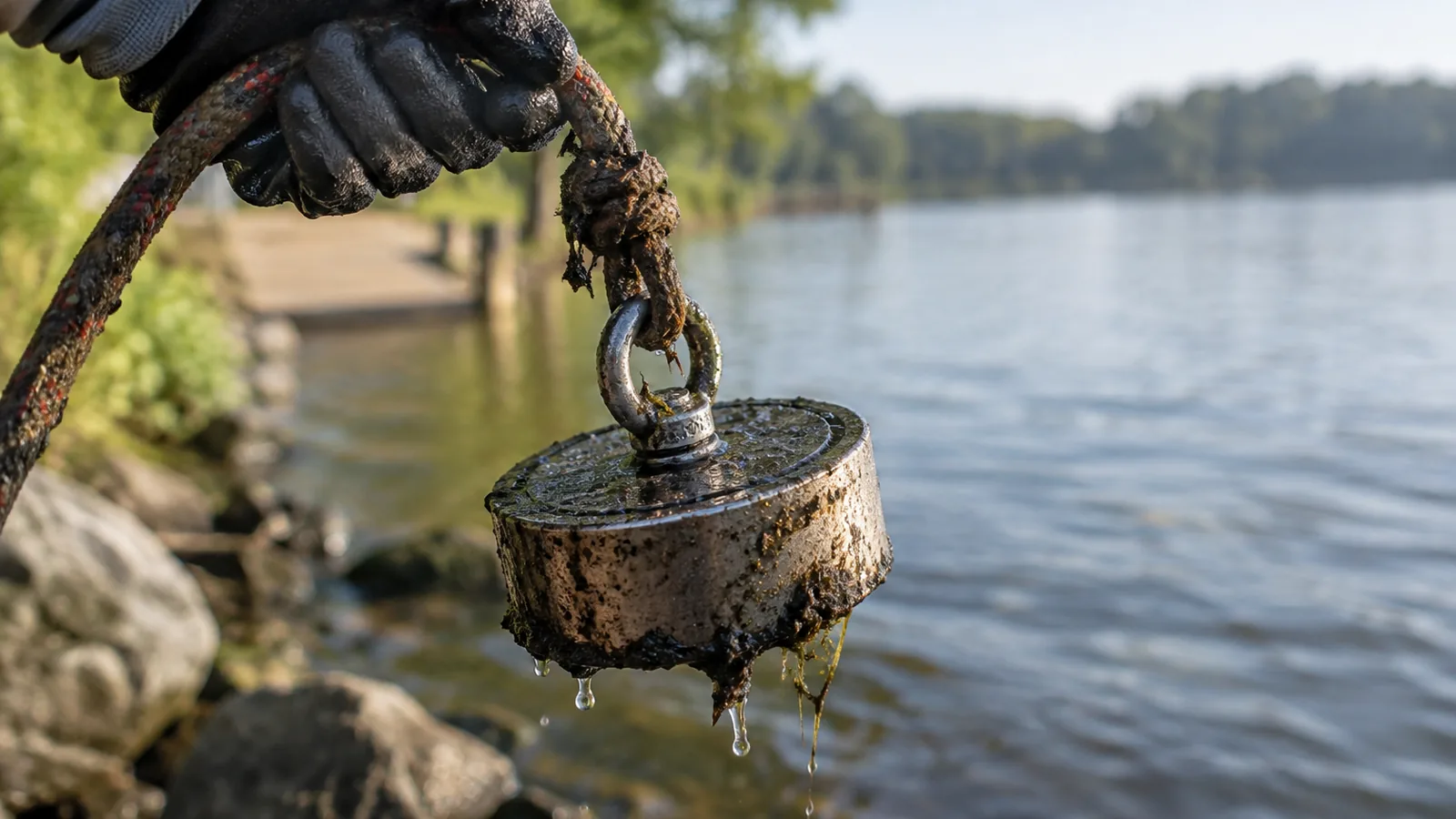
Is magnet fishing legal in the United States? Rules vary by property and jurisdiction, so check both the water and the land you’ll use to reach it. Indiana requires a free permit on Indiana Department of Natural Resources property, but that permit doesn’t cover other sites.
Is magnet fishing legal?
Quick answer: Sometimes. There’s no single nationwide rule: check whether magnet fishing is allowed at the specific water and whether you can use the land needed to reach it. Indiana requires a free permit on Indiana DNR-owned, managed, or leased property, and that permit applies only there.
- Check with the agency or owner responsible for the water and your access route.
- Get any required site-specific permission before fishing.
- If you find a suspected explosive, don’t touch or approach it; retreat and call 911.
- Leave qualifying archaeological resources on federal public or Indian lands in place, and report them to the land-managing agency or a park ranger.
Which location rules can change the answer?
The property you’re on can change the answer: rules differ by location, and these examples don’t establish a nationwide rule. Before fishing, check the rules for the water and the land you’ll use to reach it.
| Location or land type | Rule |
|---|---|
| Indiana DNR-owned, managed, or leased property | Free permit required |
| Fort Pulaski National Monument | Magnet fishing prohibited |
| Federal public or Indian lands | Qualifying archaeological resources are protected by ARPA |
Check the exact site before you go, including the property used to access the water. A restriction at a named monument, or a permit rule tied to a particular land manager, doesn’t by itself establish the rule for nearby or similarly named waters.
Do you need a permit or landowner permission?
Yes, you may need permission to magnet fish, and you may also need separate permission to reach the water. Check both permissions with the agency or owner responsible for the fishing location and the land you’ll use to get there.
Indiana requires a free permit to magnet fish on property owned, managed, or leased by the Indiana Department of Natural Resources (DNR). The permit is free and applies only to those DNR properties, so it doesn’t grant permission to fish elsewhere.
For other Indiana waters, the DNR advises checking with the relevant property manager or owner. That check matters even if you have permission to magnet fish: access may involve a bank, bridge, dock, or other land controlled by someone else, and the fishing permission alone doesn’t establish that you can use that land.
Important
The Indiana DNR permit is limited to DNR-owned, managed, or leased property; don’t treat it as a permit for other waters.
Identify both who controls the water and who controls your route to it, then ask each about location-specific requirements. A public shoreline or bridge may still have a separate manager or owner whose permission you need to access the spot.
This helps you distinguish permission to magnet fish from permission to stand, launch, or reach the water from a particular piece of land.
What should you do with dangerous or protected finds?
- Stop if the object could be unexploded ordnance. Don’t touch it or move closer to inspect it. Retreat from the area, then call 911.
Warning
Treat a suspected explosive as a serious hazard: keep away and call 911 after retreating.
Report firearms or other dangerous finds. On Indiana DNR property, contact the property office or the agency’s law-enforcement dispatch.
Leave qualifying archaeological resources in place. On federal public or Indian lands, qualifying resources are protected by the Archaeological Resources Protection Act. Don’t remove or disturb an artifact; report the discovery to the land-managing agency or a park ranger.
Use the reporting route for the land where you found the item. For a suspected explosive, call 911; for a firearm or other dangerous find on Indiana DNR property, contact the property office or its law-enforcement dispatch. For a qualifying archaeological discovery on federal public or Indian lands, contact the land-managing agency or a park ranger.
Frequently Asked Questions
Do you need a fishing license to magnet fish?
A fishing license isn’t the only requirement to check: rules depend on the specific water and the land used to reach it. Indiana requires a free permit on property owned, managed, or leased by its DNR, while the permit doesn’t apply to other properties.
Can you keep what you pull out of the water?
What you can keep depends on the site and what you find, so check the rules before taking a recovered object.
Can you magnet fish in a public park, river, lake, or canal?
You can magnet fish only if the rules for the specific water and the land you’ll use to reach it allow it. Check with the responsible agency or owner, since a public location may still have site-specific restrictions or separate access rules.
Is magnet fishing allowed on National Park Service land?
No, not everywhere: magnet fishing is prohibited at Fort Pulaski National Monument. Check with the National Park Service or the agency managing the specific site before fishing, since one monument’s rule doesn’t establish the rule for other waters or properties.
Who owns items recovered while magnet fishing?
Ownership depends on the item and the rules for the location, so check with the responsible agency or property owner before keeping a find.
Conclusion
If you’ve confirmed both the water and your access route are allowed, follow the site’s rules and keep the responsible agency’s contact details handy. If either permission is unclear, pause and ask the agency or landowner before you go. Your next step is to confirm the exact location and who controls it, then ask about permits, access, and how to report hazardous or protected finds.
Sources
- secure.in.gov (secure.in.gov)
- poh.usace.army.mil (poh.usace.army.mil)
- nps.gov (nps.gov)
- nps.gov (nps.gov)
Magnet Fishing Magnet and Rope Planner
Work out the rope length you need from depth, height and slack, then see which magnets list a pull rating at or above your load.
Digging Tool Selector by Ground Type
Pick your ground, hunt type and carry preference to see which digging tool types (shovel, trowel, hori hori, Lesche, scoop) fit best.